Domain For Sale
🛍️ Black Friday Sale is Live! Get 80% OFF on all plans. Sale ends soon! Get Offer

Category: Domain Investing

  • How to Spot a Fake Domain Offer (Protect Yourself as a Seller)

    How to Spot a Fake Domain Offer (Protect Yourself as a Seller)

    Introduction

    The number of fake domain offers has skyrocketed in 2025 as online marketplaces grow and domain flipping becomes more popular. Scammers know that domain sellers often handle valuable digital assets and can be eager to close a deal — making them a perfect target for fraudulent offers.

    These scams usually start with what looks like a legitimate email or message from an interested “buyer.” They might offer an inflated purchase price, request unusual verification steps, or try to lure you into paying appraisal or escrow fees. On the surface, it feels like an opportunity — but in reality, it’s a trap designed to steal your money, your data, or even your domain.

    To help you stay safe, here are 7 warning signs of a fake domain offer and practical ways to protect yourself as a seller in 2025.

    Why Fake Domain Offers Are Increasing in 2025

    The growth of the digital economy has made domain trading more popular than ever. Unfortunately, that same popularity has attracted scammers looking to exploit domain sellers with fake domain offers that seem legitimate at first glance.

    The Rise of Digital Domain Marketplaces and Public Data

    In 2025, there are more platforms than ever for buying and selling domains — from Afternic and Sedo to social media groups and private marketplaces. While these make domain sales easier, they also create new opportunities for scammers.
    Many rely on publicly available WHOIS data to identify active domain owners, contact them directly, and pose as serious buyers.

    How Scammers Exploit Domain Owners

    Once contact is made, scammers typically use social engineering — pretending to be brokers, investors, or business owners. They often send professional-looking emails and offer unusually high prices for your domain.
    Common red-flag tactics include:

    • Asking sellers to pay “verification” or “appraisal” fees.
    • Sending fake escrow payment confirmations from look-alike domains (e.g., escrow-secure.com instead of escrow.com).
    • Pressuring sellers to transfer ownership before funds are verified.

    Real-World Examples of Domain Seller Scams

    In one recent case reported on NamePros, a seller received an offer for $15,000 from a fake brokerage email. The scammer demanded a $99 “certified appraisal fee” using a cloned website. Similar scams have targeted owners of high-value .com and .ai domains — with fake escrow receipts and identity theft attempts becoming more common each year.

    💡 Pro Tip: Always verify buyer identity and confirm all payments directly through legitimate platforms like Escrow.com. Never trust screenshots or forwarded payment emails.

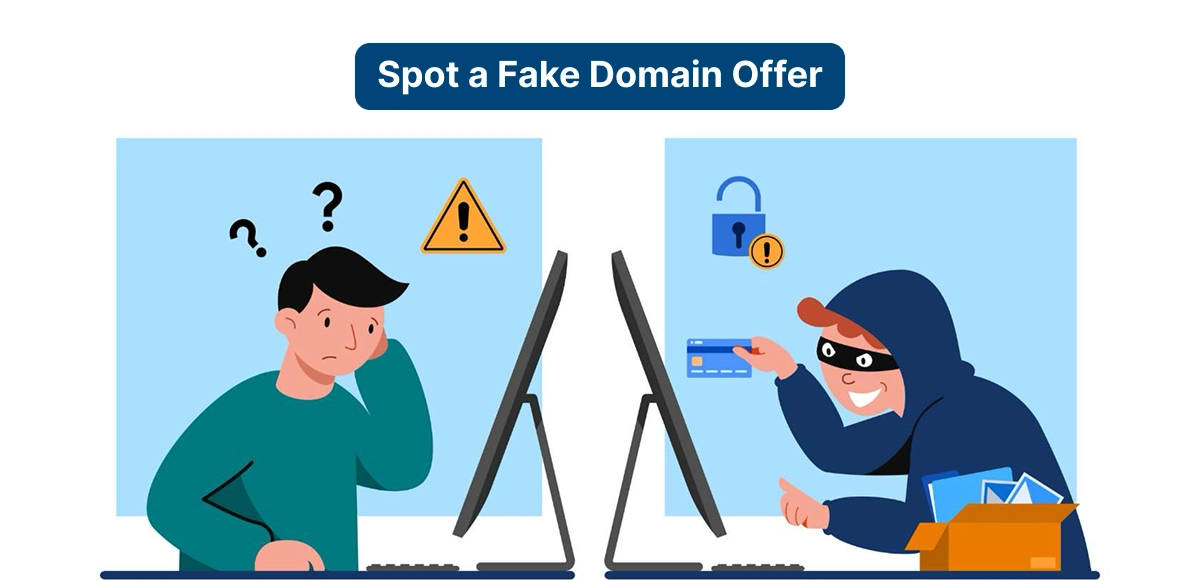
    Fake Domain Offer

    7 Warning Signs of a Fake Domain Offer

    Fake buyers are getting smarter, but the red flags are still easy to spot if you know what to look for. Here are seven warning signs that can help you quickly identify a fake domain offer and protect your portfolio.

    1. Unrealistically High Purchase Price

    If an offer sounds too good to be true, it probably is. Scammers often promise inflated prices—sometimes thousands above the market rate—to catch your attention and gain your trust. They use excitement as a weapon, hoping you’ll skip basic verification steps.
    💡 Tip: Always cross-check pricing trends on NameBio to confirm what similar domains have sold for.

    2. Buyer Refuses to Use Trusted Escrow Services

    Legitimate domain buyers have no problem using secure payment systems. If someone insists on a “custom payment method” or says they’ll “handle the transfer directly,” that’s a huge red flag.
    Always rely on reputable third-party services like Escrow.com, which verify both funds and ownership before a sale is finalized. Scammers avoid escrow because it exposes their fraud instantly.

    3. Strange Email Addresses or Domains

    Pay close attention to the sender’s email. Real businesses don’t use free accounts like Gmail or Outlook for large transactions. For example, “[email protected]” pretending to represent a major domain marketplace is an obvious fake.
    Check the sender’s domain by visiting their website or performing a WHOIS lookup. If the address looks off, don’t engage.

    4. Urgency or Pressure to Close the Deal

    Scammers thrive on urgency. They might claim there’s another buyer interested or that you must respond “within 24 hours.” This psychological trick pushes sellers to act without verifying.
    Take your time. No legitimate buyer will rush you. Verify all details, research the buyer, and confirm payments before proceeding.

    5. Requests for Upfront “Verification” Fees

    One of the oldest and most common fake domain offer scams involves asking you to pay a “verification,” “appraisal,” or “transfer” fee before completing the deal. These are almost always fake services or cloned websites.
    Never send money to “confirm” a sale. Legitimate marketplaces and escrow providers never charge the seller upfront to verify an offer.

    6. Poor Grammar or Generic Messages

    Most scam emails are copy-pasted and lack professionalism. Watch for vague phrases like:

    “Hello, I want to buy your domain at a good price. Please reply fast.”
    Such messages often include grammatical errors or irrelevant details. Genuine buyers will mention your domain name specifically and communicate clearly about price and process.

    7. Inconsistent or Missing Buyer Information

    A real buyer will have a traceable identity—LinkedIn profile, company website, or past sales activity. If the person provides no details, uses aliases, or changes their story, that’s another red flag.
    Before responding, research their company name, WHOIS info, and domain portfolio. Transparency is a hallmark of legitimate buyers.

    💡 Pro Tip: When in doubt, use your own Domain For Sale landing page powered by the Domain For Sale plugin. It lets you control the communication channel, ensuring only verified leads can contact you.

    How to Verify a Legitimate Domain Offer

    Not every inquiry is a fake domain offer—some are genuinely interested buyers. The key is knowing how to separate real opportunities from scams. Before you respond or transfer anything, take these steps to verify that the offer is legitimate.

    Check the Buyer’s Domain Registration and Online Presence

    Start by researching the buyer’s email domain. Perform a WHOIS lookup or visit their website to confirm whether it’s active and professional. A legitimate buyer will usually have an established web presence, company profile, or digital footprint you can verify.
    💡 Tip: If the buyer claims to represent a company, cross-check the company’s contact page to see if the person’s name and email actually match.

    Use Trusted Escrow Services

    Always process payments through verified, secure platforms. Services like Escrow.com and Afternic act as neutral third parties that protect both sides of the transaction. They hold the funds until the domain transfer is confirmed—removing nearly all risk of fraud.

    Ask for LinkedIn or Professional Contact Details

    Real buyers are transparent. Don’t hesitate to ask for their LinkedIn profile, business website, or professional references. Scammers often avoid giving this information because it exposes their fake identities. A quick LinkedIn search can help confirm whether you’re dealing with a legitimate domain investor or business representative.

    Verify Payment Before Initiating Any Domain Transfer

    Never transfer a domain based solely on an email confirmation or screenshot. Log into your escrow or registrar account and confirm that funds have cleared before pushing the domain. Once a domain is transferred, it’s nearly impossible to get it back.

    💡 Pro Tip: Use a professional landing page built with the Domain For Sale plugin to centralize communication and payment links. It ensures buyers interact only through your verified channels, minimizing the risk of scams.

    Tools and Resources to Protect Yourself as a Seller

    Even experienced sellers can fall victim to a fake domain offer if they don’t use the right protective tools. Here are a few simple yet powerful ways to secure your domains and ensure all incoming offers are legitimate.

    Use WHOIS Privacy Protection

    Scammers often scrape public WHOIS databases to find domain owners’ contact details. Enabling WHOIS privacy protection hides your name, email, and phone number from public view, reducing the risk of phishing or spam offers. Most registrars—like GoDaddy, Namecheap, or Google Domains—offer this feature either free or at a minimal cost.

    Keep Domain Lock Enabled on Your Registrar

    A domain lock prevents unauthorized transfers from your account. Without it, a scammer who gains temporary access to your registrar could steal your domain in seconds. Always ensure your domain lock is active—and never disable it until a verified sale is confirmed through escrow.

    Use the Domain For Sale Plugin for Secure Inquiries

    The Domain For Sale plugin is one of the best tools to safeguard your sales process. It lets you create verified landing pages where all offers come directly through your own website—not random emails.
    Each inquiry includes verified buyer contact details, reducing spam and fake offers. You can also integrate trust signals, SSL encryption, and direct Escrow.com payment options for complete protection.

    💡 Pro Tip: Centralize all your domain communications. If someone insists on taking the conversation off your official page, that’s often a red flag.

    What to Do If You Receive a Fake Domain Offer

    Even with the best precautions, you may still encounter a fake domain offer from time to time. The key is to act quickly and safely to prevent damage, protect your data, and alert others in the community.

    Scammers often include links that lead to phishing pages or malware downloads. Never click on attachments or URLs in suspicious emails. Avoid providing any personal or registrar login information—legitimate buyers will never ask for it.

    Report Phishing Attempts to Your Registrar or ICANN

    If you suspect a scam, report it immediately to your domain registrar (such as GoDaddy, Namecheap, or Google Domains). You can also submit a complaint to ICANN to help prevent the scammer from targeting others. Many registrars now have dedicated abuse or phishing departments that can take action.

    Block or Filter Recurring Scam Emails

    Use your email provider’s spam filter or create custom rules to block senders or phrases commonly used in fake domain offer scams. Over time, this helps reduce inbox clutter and minimizes exposure to potential threats.

    Share Scam Patterns with Domain Communities

    Communities like NamePros and DNForum are great places to report scam attempts. Sharing details (without personal data) helps warn others and keeps the industry informed about new tactics scammers use.

    💡 Pro Tip: Keep a record of suspicious messages—including sender addresses, timestamps, and content—before deleting them. It could be useful if you need to file a formal report later.

    Final Thoughts

    In a world where scams are evolving faster than ever, staying alert is the best way to protect your domain portfolio and your reputation. Recognizing the warning signs of a fake domain offer—and knowing how to respond—keeps you one step ahead of cybercriminals.

    Knowledge is your strongest defense. Every domain seller, whether a beginner or seasoned investor, should take the time to verify buyers, use secure tools, and maintain professional sales channels. By following the right precautions, you can confidently navigate the domain market and focus on genuine opportunities.

    FAQs About Fake Domain Offers in 2025

    1. How do I confirm if a domain offer is legitimate?

      Start by verifying the buyer’s identity. Check their email domain, search for them on LinkedIn, and confirm their company’s contact info through a WHOIS lookup. Legitimate buyers will also agree to use trusted services like Escrow.com or Afternic. If they resist verification or request unusual payment methods, it’s likely a fake domain offer.

    2. Can scammers really steal my domain through fake offers?

      Yes — if you share registrar credentials, disable domain lock, or transfer ownership before payment clears, scammers can take control of your domain. Always verify payment in your escrow account and confirm it has settled before initiating a transfer.

    3. What’s the safest way to sell domains online?

      Use reputable platforms and verified escrow services to handle transactions. The Domain For Sale plugin is another safe option — it lets you host secure landing pages on your own WordPress site, collect verified buyer inquiries, and connect directly through SSL-protected forms.

    4. Should I ever pay for domain verification or appraisal?

      No. Legitimate buyers never require you to pay for “verification” or “appraisal” before purchase. These requests are classic signs of a fake domain offer scam. If someone insists on it, walk away immediately.

    5. How can I report a fake domain offer?

      Report it to your registrar’s abuse department and to ICANN. You can also share details with communities like NamePros or DNForum to help warn other sellers.

    Create Secure, Verified Listings with the Domain For Sale Plugin

    The Domain For Sale plugin lets you build SSL-secured, verified landing pages right inside WordPress—so you can safely manage inquiries, display prices, and connect directly with real buyers.

  • 5 Mistakes That Lower Domain Value (and How to Avoid Them)

    5 Mistakes That Lower Domain Value (and How to Avoid Them)

    Introduction

    In 2025, your domain name is more than just an online address — it’s a digital asset that can gain or lose value based on how you manage it. Whether you’re an investor, entrepreneur, or brand owner, domain value plays a major role in how your website performs in search results and how buyers perceive your credibility.

    But here’s the catch: even high-quality domains can lose value if handled poorly. From neglecting renewals to overusing keywords, simple missteps can drastically reduce what your domain is worth — both in the market and in SEO.

    To help you protect your investment, let’s explore the 5 mistakes that lower domain value and how to avoid them, so your domains stay profitable and powerful in 2025.

    Mistake 1 – Using Spammy or Over-Optimized Keywords

    One of the most common mistakes that lower domain value is stuffing too many keywords into the name. While it might seem smart to include every possible search term, over-optimized or spammy domains often backfire.

    Why Keyword Stuffing Hurts SEO and Branding

    Search engines and users both value authenticity. A domain like BestCheapHostingDealsOnline.com might look descriptive, but it feels forced and untrustworthy. Google’s algorithms have evolved to favor natural, brandable domains that reflect credibility and user experience.
    On the other hand, something clean and memorable like HostingHero.com instantly feels more professional and authoritative — two key qualities that improve SEO and attract buyers.

    How to Avoid This Mistake

    • Keep it short and brandable. Aim for a name that balances clarity with creativity.
    • Avoid keyword overload. One keyword is fine — four is too many.
    • Think long-term. Choose a name that could grow with your business or appeal to multiple industries.

    💡 Pro Tip: Always ask, “Would I trust this domain if I saw it in Google search results?” If the answer is no, it’s probably too spammy.

    Mistake 2 – Ignoring Domain History Before Buying

    Another major mistake that lowers domain value is buying a name without checking its history. Just like buying used property, you need to know what’s been built—and possibly broken—before you take ownership.

    Why Domain History Matters

    Every domain carries a digital footprint. If a domain was previously used for spam, malware, or shady SEO tactics, that history doesn’t just disappear. Google may have already penalized it, making it much harder for you to rank or resell later.

    Tools to Research Domain History

    Before you invest, use trusted SEO tools to get a clear picture of a domain’s past:

    • Ahrefs – Check backlinks, anchor text, and referring domains.
    • Moz – Analyze domain authority and spam score.
    • Wayback Machine – See what the domain’s old versions looked like and how it was used.

    These tools reveal whether the domain had legitimate use—or if it’s been part of spam networks or link farms.

    If a domain has thousands of low-quality backlinks or signs of penalty, you could spend months trying to clean it up without ever fully restoring its SEO potential. That’s time and money wasted—two things that directly lower your domain’s overall value.

    💡 Pro Tip: Always review a domain’s backlink profile and past content before buying. A few minutes of research can save you from inheriting years of SEO damage.

    Mistake 3 – Letting the Domain Expire or Neglecting Renewals

    It might sound simple, but forgetting to renew your domain is one of the most painful mistakes that lower domain value—and it happens more often than you’d think.

    When a domain expires, you don’t just lose ownership—you lose everything tied to it: search rankings, backlinks, authority, and brand reputation. Once a domain enters the public market again, competitors or resellers can scoop it up within hours. Even if you recover it later, rebuilding SEO trust is an uphill battle.

    Auto-Renew Best Practices

    • Enable auto-renewal: This is the easiest way to ensure your domains never lapse.
    • Keep payment info updated: Expired credit cards are one of the most common causes of failed renewals.
    • Set reminders: Even with auto-renew, schedule an annual check-in to confirm all domains are active and billed correctly.

    Many domain registrars like GoDaddy or Namecheap allow you to manage renewals from one dashboard, making it simple to monitor your portfolio.

    Example: When Big Brands Forgot to Renew

    Even major companies have made this mistake. In 2017, Microsoft briefly lost control of one of its cloud service domains because of a missed renewal, temporarily disrupting critical services. Smaller brands may not recover as easily—once your domain is gone, its value (and trust) often disappears with it.

    💡 Pro Tip: Treat your domains like digital real estate—renew early, track often, and never assume “auto-renew” means “problem solved.”

    Mistake 4 – Overpricing or Undervaluing Your Domain

    Another common mistake that lowers domain value is failing to price your domain correctly. Many sellers either overestimate their domain’s worth and scare off potential buyers—or undervalue it and lose out on significant profit.

    The Danger of Overpricing or Undervaluing

    When you price too high, buyers assume you’re not serious or flexible. On the other hand, pricing too low gives the impression that your domain has little value. The goal is to find a price range that reflects both the domain’s market demand and intrinsic value (keywords, TLD, age, and backlinks).

    Check Market Value with Appraisal Tools

    Before setting a price, research similar sales and get professional estimates:

    • GoDaddy Appraisals – Provides an instant estimated value based on real market data.
    • NameBio – Offers a searchable database of verified domain sales to help you gauge realistic prices.

    These tools give you a baseline for negotiation, helping you avoid emotional or arbitrary pricing decisions.

    Use the Domain For Sale Plugin to Display Transparent Pricing

    Once you’ve determined your ideal price, make it easy for buyers to see it. The Domain For Sale plugin lets you showcase your domains with clear pricing, inquiry forms, and trust signals—all from your WordPress site. Transparent pricing helps establish credibility and speeds up the decision-making process.

    💡 Pro Tip: Always leave room for negotiation. Setting your asking price about 10–20% higher than your target sale amount allows flexibility while maintaining perceived value.

    Mistake 5 – Skipping Branding and Landing Page Design

    The last but equally critical mistake that lowers domain value is neglecting your domain’s presentation. Many owners simply park their domains on blank or generic pages, missing a huge opportunity to attract and convert potential buyers.

    Why Unbranded or Plain Parked Pages Kill Domain Value

    A parked domain with ads or “coming soon” text looks abandoned. Buyers are less likely to take it seriously, and Google rarely indexes such pages favorably. On the other hand, a branded, visually appealing landing page communicates that your domain is active, credible, and worth the price.

    The Role of Trust Signals

    Even a simple sales page should include:

    • SSL Certificate (https://): Buyers trust secure websites.
    • Clear Call-to-Action (CTA): “This domain is for sale” with a visible button or contact form.
    • Contact Information: Let buyers reach you directly—no guessing or digging required.

    These small details dramatically increase both perceived value and buyer confidence, two factors that influence faster sales.

    How the Domain For Sale Plugin Helps

    The Domain For Sale plugin makes it easy to create clean, professional landing pages that showcase your domains. With built-in SSL support, customizable layouts, and call-to-action buttons, you can turn a plain parked page into a polished buyer-ready experience in minutes.

    💡 Pro Tip: Treat every domain like a storefront. A beautiful, trustworthy presentation makes buyers more willing to pay premium prices.

    How to Protect and Increase Domain Value in 2025

    Now that you know the mistakes that lower domain value, let’s focus on how to strengthen and grow it. Increasing a domain’s worth requires consistency, research, and presentation — not just ownership.

    Invest in Short, Memorable, Keyword-Balanced Names

    Domains that are short, easy to remember, and include relevant keywords continue to perform best in 2025. A short, brandable name not only attracts buyers but also boosts SEO and long-term recognition — key factors that increase domain value over time.

    Keep Your Portfolio Renewed and Organized

    Neglecting renewals is one of the most costly mistakes that lower domain value. Set all your domains to auto-renew, keep payment information current, and periodically review your portfolio to remove low-performing names. Organized management keeps your assets secure and your brand consistent.

    A domain’s backlink profile is one of its strongest indicators of value. Use tools like Ahrefs or Moz to track backlinks and organic traffic. Spotting issues early helps you prevent SEO penalties that could reduce your domain’s overall worth.

    Showcase with Clean Landing Pages for Credibility

    Even the best domain names need presentation. Using the Domain For Sale plugin ensures each of your domains has a secure, well-designed landing page that communicates value to potential buyers. Professional design and visible contact options build trust — which directly helps increase domain value.

    💡 Pro Tip: Think of your domains like digital real estate. Maintenance, visibility, and trust all play equal roles in increasing value.

    Final Thoughts

    Avoiding these mistakes that lower domain value is one of the smartest ways to protect your digital assets and grow your online presence. From choosing the right name to maintaining renewals and branding, each small step adds long-term stability and worth.

    The good news? Every domain can increase in value with the right care, consistency, and presentation. Treat your domains like investments — maintain them, showcase them professionally, and watch their value grow year after year.

    FAQs About Domain Value in 2025

    What reduces a domain’s value the fastest?

    The fastest way to lose value is by ignoring quality control — things like spammy backlinks, expired renewals, or keyword-stuffed names. These are classic mistakes that lower domain value and can quickly destroy credibility with both search engines and buyers.

    How can I check if a domain has a bad history?

    You can analyze a domain’s past using tools like Ahrefs, Moz, and the Wayback Machine. Reviewing backlinks, content history, and ownership records helps identify whether a domain has been penalized or misused.

    Do short domains always have higher value?

    Generally, yes. Short, memorable domains are easier to brand and type, making them more desirable for buyers and better for SEO. However, relevance, trust, and branding quality matter just as much as length when you’re trying to increase domain value.

    Can I recover a domain’s value after penalties?

    It’s possible but takes time. You’ll need to remove bad backlinks, disavow spam sources, and rebuild the site with quality content. Consistent SEO work can help restore authority, though prevention is always better than recovery.

    What’s the best way to showcase domains for sale?

    Using the Domain For Sale plugin is the easiest and most effective option. It lets you design professional, secure, and mobile-friendly landing pages that highlight your domain’s strengths and attract serious buyers — helping you avoid mistakes that lower domain value.

    Turn your domains into income-generating assets today.

    The Domain For Sale plugin makes it effortless to create polished landing pages, display transparent pricing, and capture buyer leads — all from your WordPress dashboard.

  • The Future of Digital Real Estate: Why Domains Are Like Online Property

    The Future of Digital Real Estate: Why Domains Are Like Online Property

    🏠 Introduction

    When people think of wealth, they often picture property—houses, office buildings, and land that grow in value over time. But in today’s online-first world, digital real estate domains are playing the same role. Just like prime land in a busy city, the right domain name is scarce, valuable, and essential for growth.

    The problem is that many still undervalue domain names as real assets. Businesses will invest heavily in storefronts, marketing, or office space, but overlook the fact that their domain is their online property—the foundation of their digital presence.

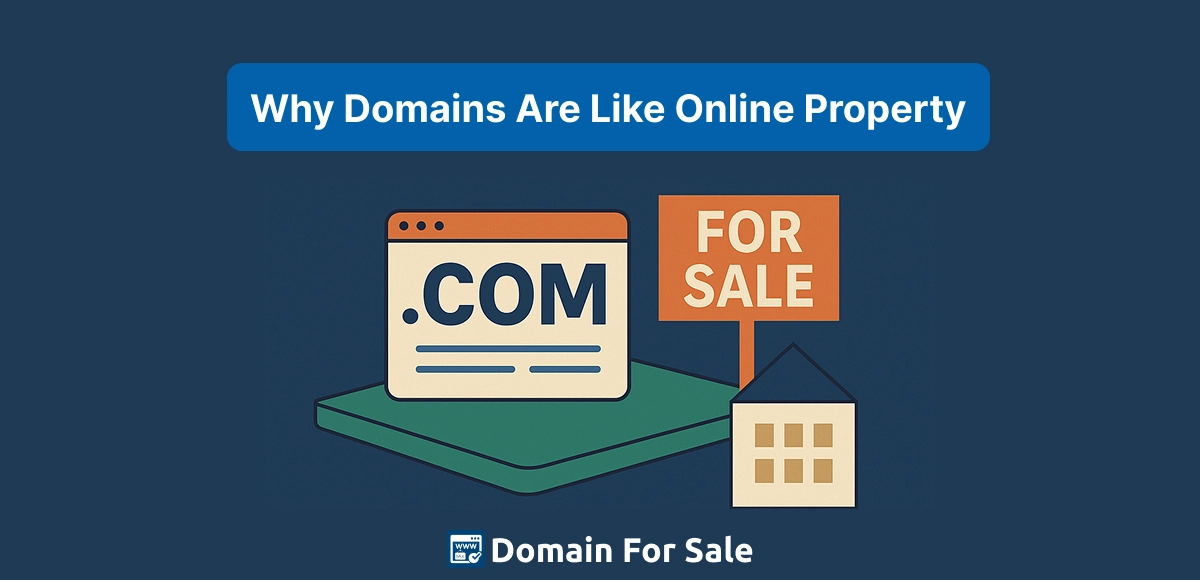
    Here’s the truth: domains aren’t just technical addresses. They are unique pieces of online property that build authority, attract attention, and often appreciate in value.

    In this post, we’ll explore five key reasons why digital real estate domains are the future of online property—and why you should treat them as long-term investments, not just yearly expenses.

    🌐 What Is Digital Real Estate?

    When we talk about digital real estate domains, we’re referring to the assets that shape your online presence: domain names, websites, and branded online properties. Just like physical property, these assets can be bought, sold, rented, and developed to increase their value over time.

    At the center of it all are domains. Your domain is the foundation of your digital identity—the address people use to find you, the first impression they encounter, and the cornerstone of your brand online. Without a strong domain, your business is essentially operating on borrowed space, relying on third-party platforms instead of owning its own property.

    Think of domains as land plots on the internet. Some are in prime “locations”—short, memorable, keyword-rich names that attract attention instantly. Others are less desirable, like undeveloped land in a remote area. Just as in real estate, location and scarcity determine long-term value.

    Owning the right digital property isn’t optional anymore—it’s a strategic move that can define your authority, credibility, and growth online.

    🏙️ Reason 1: Scarcity Creates Value

    One of the biggest reasons digital real estate domains hold long-term value is scarcity. Just as there’s only so much prime land in the heart of a city, there’s only a limited number of high-quality domain names available on the internet.

    The best domains—short, keyword-rich, and highly brandable—are already owned. Names like music.com or travel.net aren’t just addresses; they’re premium properties that command attention, trust, and authority.

    This scarcity naturally drives demand. As more businesses move online, competition for memorable, high-value domains increases. The result? Their worth continues to grow, making domains an appreciating asset just like physical real estate.

    If you own a strong domain, you’re sitting on valuable online property that becomes more desirable with time.

    📍 Reason 2: Location Equals Authority

    In traditional real estate, location is everything. A store on Main Street attracts more traffic than one tucked away in an alley. The same principle applies to digital real estate domains—but instead of geography, it’s about keywords and TLDs (top-level domains).

    A strong domain name instantly boosts both SEO visibility and brand trust. Search engines favor clean, keyword-relevant domains, while customers are more likely to click and remember them. For example, health.com projects authority, credibility, and relevance—while a clunky alternative like health-site-123.biz feels untrustworthy and forgettable.

    Just like prime physical locations, premium domains act as a magnet for traffic, attention, and long-term brand growth. Owning the right “location” online gives you an edge competitors can’t easily replicate.

    💰 Reason 3: Domains Generate Passive Income

    Unlike many traditional assets, digital real estate domains can earn money even when you’re not actively using them. Just like physical property can be rented out, domains can create steady streams of passive income in several ways.

    🔑 Lease Your Domain

    If you own a desirable domain but don’t want to sell it, you can lease it to a business. They get the credibility of using your domain, while you enjoy recurring payments—similar to renting out an apartment.

    📢 Park Domains with Ads

    Domain parking services let you display ads on your unused domains. Every time someone types in the domain and clicks an ad, you earn revenue. High-traffic or keyword-rich domains can generate significant passive income this way.

    🔄 Flip Domains for Profit

    Domain flipping—buying low, selling high—is another proven strategy. Many investors purchase undervalued names, hold them, and sell them later for a profit once demand rises.

    For example, a simple domain like TravelDeals.com could be parked with ads or turned into an affiliate microsite, earning steady income until the right buyer comes along.

    Digital properties don’t just sit idle—they can work for you, generating cash flow while their long-term value continues to grow.

    📈 Reason 4: Domains Appreciate Over Time

    One of the most powerful aspects of digital real estate domains is their ability to appreciate in value. Just like prime neighborhoods become more expensive as demand rises, strong domain names often grow more valuable the longer you hold them.

    🌟 Rising Demand for Brandable Domains

    Short, simple, and memorable names are in high demand. Businesses want domains that are easy to type, easy to say, and easy to remember. As the internet gets more crowded, these premium names become increasingly scarce—and their value climbs.

    💼 Domains That Sold for Millions

    History has shown the immense upside of domain investing:

    • Insurance.com sold for $35.6 million.
    • Voice.com went for $30 million.
    • Even niche names like Hotels.com and Fund.com fetched multi-million-dollar price tags.

    While not every domain will reach those heights, the principle remains: well-chosen domains are digital properties that appreciate over time, just like land or real estate.

    Owning the right domain today could mean sitting on a future asset worth far more tomorrow.

    🌍 Reason 5: Domains Are Essential for Online Presence

    Every business needs a domain just like every store needs a physical location. Without it, your brand has no true “home” online.

    A strong, memorable domain name instantly builds credibility and trust. Customers are more likely to engage with a business that owns brandname.com than one that relies on a long, complicated URL or only a social media page.

    Relying solely on platforms like Facebook, Instagram, or LinkedIn is like setting up shop on rented land—you don’t control the rules, algorithms, or future of the platform. A domain, however, is digital property you truly own.

    This ownership gives you freedom, stability, and authority in the digital world. Whether you’re a startup, freelancer, or global company, investing in a domain isn’t optional—it’s essential.

    💡 How to Invest in Digital Real Estate Domains

    Now that we’ve established the value of digital real estate domains, the next question is—how do you actually invest in them? Just like property investors study neighborhoods and trends, smart domain investors research, acquire, and manage their digital assets strategically.

    🔍 Research the Right Keywords

    Focus on domains that align with industries, trends, or evergreen niches. Short, brandable names with strong keyword value (like fitnesshub.com or greentech.org) are always in demand.

    ✨ Keep Names Short & Memorable

    The best domains are easy to type, pronounce, and recall. Aim for simple, one to two-word domains that pass the “radio test”—can someone remember and spell it after hearing it once?

    🌐 Choose the Right TLD

    .com is still king, but strong alternatives like .org, .io, or .ai are becoming valuable in niche industries. Pick a TLD that matches your audience and brand positioning.

    🏦 Use Marketplaces & Auctions

    Domains can be bought directly from registrars, but many of the best names are sold on domain marketplaces (like Sedo or Flippa) or via auctions. This is where investors find hidden gems or premium names worth holding.

    🔧 Manage & Showcase with Plugins

    If you’re building a portfolio, tools like the Domain For Sale plugin make it easy to showcase and sell your domains directly on WordPress. Instead of leaving domains parked, you can create professional landing pages that highlight value and capture buyer interest.

    Investing in digital domains isn’t about luck—it’s about strategy, timing, and having the right tools to maximize value.

    ⚠️ Common Mistakes to Avoid in Domain Investing

    Like traditional property investing, buying digital real estate domains comes with risks if you’re not careful. Here are some of the most common mistakes beginners make—and how to avoid them.

    ❌ Buying Too Many Low-Quality Names

    It’s tempting to scoop up dozens of cheap domains, but quantity doesn’t equal value. A handful of premium, brandable names is far more valuable than a portfolio full of long, clunky, or irrelevant ones.

    ⚖️ Ignoring Trademarks & Branding Issues

    Registering a domain that infringes on an existing brand or trademark can lead to legal trouble. Always research your domain ideas to ensure they’re clear of conflicts before purchasing.

    💸 Overpricing Domains When Selling

    Domains are valuable assets, but setting unrealistic prices can scare off potential buyers. Research comparable sales and be open to negotiation. A reasonable asking price often leads to faster and more profitable transactions.

    Avoiding these mistakes will help you build a stronger, more profitable portfolio of digital real estate domains that truly appreciate in value.

    🎯 Conclusion

    Domains aren’t just technical addresses—they are digital real estate with the same long-term value and potential as physical property. From scarcity and authority to passive income and appreciation, domains prove to be one of the smartest online investments you can make.

    Instead of treating domains as yearly expenses, start treating them as valuable assets. The right name can boost your brand, generate revenue, and serve as an appreciating investment for the future.

    Ready to showcase and sell your domains like a pro? Event listings may have their stage—but in the world of domains, your portfolio deserves one too.

    FAQs – Digital Real Estate Domains

    What are digital real estate domains?

    Digital real estate domains are domain names treated as valuable online property. Just like physical real estate, they can be bought, sold, leased, or developed to increase their long-term value.

    Are domains really like online property?

    Yes. Domains act as the land plots of the internet. Owning a strong domain means you control a unique piece of digital space that businesses and individuals rely on for credibility and visibility.

    How do domains gain value over time?

    Domains appreciate as demand grows, especially if they are short, keyword-rich, or highly brandable. Scarcity drives up value, making digital real estate domains a smart long-term investment.

    Can I make money from digital real estate domains?

    Absolutely. You can lease domains, park them with ads, flip them for profit, or build websites that generate recurring revenue. Domains are versatile assets that can earn both passive and active income.

    What’s the best way to sell domains?

    The best way is to list them on domain marketplaces, auctions, or create your own portfolio site using tools like the Domain For Sale plugin for WordPress. This gives your domains professional landing pages that attract serious buyers.

    🚀 Showcase Your Domains Today

    Turn your unused or premium names into professional listings with the Domain For Sale plugin for WordPress. Whether you want to capture leads or sell directly, Domain For Sale makes it simple.

  • Best SEO Benefits of a Short Memorable Domain in 2025

    Best SEO Benefits of a Short Memorable Domain in 2025

    Introduction: SEO benefits of a short memorable domain

    In 2025, some people wonder if domain names still carry weight for SEO. The answer is a clear yes—your domain is still the digital front door to your brand, and search engines continue to treat it as a key ranking signal. Choosing the right one can make a major difference in how users and Google view your site.

    Short, memorable domains aren’t just branding assets; they also bring measurable SEO benefits. From higher click-through rates to stronger backlinks, the right domain can improve both visibility and authority in search results.

    In this guide, we’ll break down the SEO benefits of a short memorable domain and why it’s one of the smartest investments you can make for your online success in 2025.

    What Makes a Domain Short and Memorable?

    Before diving into the SEO benefits of a short memorable domain, it’s important to understand what actually makes a domain “short” and why memorability matters. A domain that’s easy to type, spell, and recall creates a lasting advantage for both branding and search performance.

    Ideal Length: 6–14 Characters

    Most experts agree that the sweet spot for a short domain is between 6–14 characters. Anything longer becomes harder to remember and more prone to typos. Domains like Twitter.com or Booking.com show how short names not only stand out but also deliver better SEO and branding impact.

    Easy Spelling, No Hyphens or Numbers

    Complicated spellings, hyphens, or numbers make domains forgettable and prone to mistakes. For example, Best-Shoes-4-U.com is harder to share and trust than something clean like BestShoes.com. Keeping your domain simple boosts both user experience and search engine trust signals.

    Brandability and Recall Value

    A domain isn’t just an address—it’s your brand identity. Short, catchy names are easier for people to remember, type into search bars, and recommend to others. That memorability translates into more direct traffic, higher click-through rates, and long-term SEO strength.

    💡 Pro Tip: If you’re buying domains for resale, prioritize brandable names that are short and easy to pronounce—they’ll be more attractive to both buyers and search engines.

    SEO Benefits of a Short Memorable Domain

    A short, memorable domain isn’t just easier to share—it brings measurable search advantages. Here are the key SEO benefits of a short memorable domain every business owner and investor should know.

    Higher Click-Through Rates (CTR) in Search Results

    Users are far more likely to click on domains that look clean and professional. A short, direct name inspires trust, while long or cluttered domains often look spammy. Short domains also display better in SERPs (search results) and in ads, which can improve your overall CTR.

    Better User Experience and Lower Bounce Rates

    When visitors can type your domain easily without mistakes, it leads to a smoother experience. Short, simple domains reduce frustration and keep users on your site longer. This improved engagement sends positive signals to search engines, supporting better rankings.

    Backlinks are one of Google’s strongest ranking factors. A short, brandable domain is easier for bloggers, journalists, and businesses to reference in their content. Over time, this can result in more backlinks, higher domain authority, and stronger SEO performance.

    Keyword Relevance and Branding Power

    The best domains balance keyword relevance with brandability. While exact-match domains can sometimes feel forced, a short and memorable domain that naturally includes a keyword can boost both recognition and rankings. This synergy helps your site stand out in competitive markets.

    Long-Term Authority and Trust

    Search engines reward domains that demonstrate authority and consistency. A short, recognizable name builds credibility with both users and algorithms. Over time, this authority makes it easier for your domain to rank consistently well compared to long, generic names.

    Case Studies – Short Domains That Perform Well

    Real-world examples show how short, memorable domains don’t just look good—they perform exceptionally well in both branding and SEO.

    • Hotels.com – A single keyword domain that ranks at the top for countless travel-related searches. Its simplicity and authority make it the go-to resource in its niche.
    • Zoom.com – Short, punchy, and easy to type. Its brandability combined with global recognition helped it dominate the video conferencing market.
    • Tesla.com – Another prime example of a short branded domain that carries instant recognition and authority in search results.

    Real-World Sales and SEO Impact

    According to NameBio, premium short domains consistently sell for six to seven figures. For instance:

    • Voice.com sold for $30 million in 2019.
    • 360.com sold for $17 million in 2015.
    • FB.com was acquired by Facebook for $8.5 million in 2010.

    These sales prove the long-term value of short domains. Beyond price tags, their SEO impact is undeniable—short domains build trust, attract backlinks, and rank more easily due to their clarity and memorability.

    💡 Pro Tip: When evaluating short domains, don’t just consider resale value. Look at how they can perform in SEO and branding over time.

    How to Choose a Short Memorable Domain for SEO

    If you want to take advantage of the SEO benefits of a short memorable domain, the selection process matters just as much as the name itself. Here’s how to pick the right one.

    Check Availability and Avoid Trademarks

    Before you commit to a domain, make sure it’s actually available for registration or purchase. At the same time, avoid domains that include trademarked brand names. Using a trademarked word can result in legal disputes through ICANN’s UDRP process, which could cause you to lose the domain without compensation.

    Tools to Help You Find Short Domains

    • GoDaddy Domain Search – Quickly check availability and pricing across different TLDs.
    • LeanDomainSearch – Generates creative short domain ideas by pairing your keyword with brandable suggestions.

    These tools make it easier to find short, clean, and SEO-friendly domains that fit your brand or investment strategy.

    Use the Domain For Sale Plugin to Showcase and Monetize

    Once you’ve secured your domain, the next step is turning it into an asset. With the Domain For Sale plugin, you can instantly create a professional landing page that lets potential buyers see the domain is available. It’s a simple way to monetize and showcase your domains while increasing your chances of selling at a profit.

    Common Mistakes to Avoid

    Even with the many SEO benefits of a short memorable domain, new buyers and businesses often make mistakes that reduce a domain’s value and long-term performance. Here are three pitfalls to watch out for:

    Stuffing Exact-Match Keywords

    It’s tempting to register domains like BestShoesInNewYorkCity.com just to capture search traffic. But keyword stuffing makes domains look spammy and harder to remember. Search engines now prioritize brandability and user experience over awkward exact matches.

    Ignoring Brandability

    A domain isn’t just about keywords—it’s also your brand. Names that are short, catchy, and easy to pronounce carry more weight. Focusing only on SEO while ignoring brand potential can limit your domain’s long-term success.

    Choosing Length Over Meaning

    Some buyers chase ultra-short domains at all costs, even if the name has no relevance. A short but meaningless domain won’t perform as well as a slightly longer one with real branding or keyword value. The key is balance: keep it concise, but meaningful.

    💡 Pro Tip: Always ask yourself, “Would I remember this domain after hearing it once?” If the answer is no, it’s not truly memorable.

    Final Thoughts

    Short, memorable domains remain one of the smartest digital investments in 2025. They don’t just look professional—they also deliver real SEO advantages. From higher click-through rates to stronger backlink potential, these domains build long-term trust, brand recognition, and search authority.

    If you want to boost CTR, improve user trust, and build domain authority, investing in short, memorable names is the way forward. The right domain is more than an address—it’s an SEO and branding powerhouse.

    FAQs About SEO and Short Domains in 2025

    Do short domains rank better in Google?

    Yes, short domains often perform better because they’re easier to remember and attract more backlinks. While Google doesn’t rank purely on length, the SEO benefits of a short memorable domain include higher click-through rates and stronger branding.

    How many characters is ideal for a domain name?

    The sweet spot is usually 6–14 characters. This range is long enough for meaning but short enough for recall. It aligns with the key SEO benefits of a short memorable domain, making names both user-friendly and search-friendly.

    Is branding more important than keywords in domains?

    Both matter, but branding usually wins in the long run. Overusing keywords can look spammy, while a short, memorable, brandable domain improves trust, authority, and recognition—factors that support SEO growth.

    Are .coms always best for SEO?

    Yes and no. .com is still the most trusted and widely recognized extension, which boosts authority. However, in 2025, TLDs like .ai, .io, and .xyz are growing in value, especially for tech and Web3 startups.

    Can I sell a short memorable domain for profit?

    Absolutely. Short, brandable domains are in high demand and consistently sell for premium prices on platforms like NameBio. Owning one not only brings SEO benefits but can also become a profitable digital asset.

    🚀 Showcase and Monetize Your Domains

    The Domain For Sale plugin makes it simple to showcase domains with professional landing pages, capture buyer inquiries, and close deals faster.

  • 5 Mistakes New Buyers Make When Purchasing a Domain

    5 Mistakes New Buyers Make When Purchasing a Domain

    Introduction

    Buying the right domain name is one of the smartest moves you can make for your online presence. The perfect domain builds trust, boosts SEO, and makes your brand easier to remember. In today’s digital marketplace, your domain is more than just an address—it’s the foundation of your identity.

    But here’s the catch: many beginners rush into buying domains without doing proper research. They overpay, ignore red flags, and end up with names that don’t deliver value—or worse, bring legal or financial headaches. A single mistake can cost time, money, and opportunities.

    To help you avoid these pitfalls, we’ve outlined the 5 mistakes new buyers make when purchasing a domain—and how you can steer clear of them to make smarter, safer investments.

    Mistake 1 – Ignoring Trademark Issues

    One of the most common mistakes new buyers make when purchasing a domain is ignoring trademarks. It might seem tempting to grab a name that includes a famous brand or product, but this can quickly land you in trouble.

    The Risk of Buying Domains with Brand Names

    Domains that contain trademarks (like “NikeShoesSale.com” or “CocaColaFans.net”) are legally risky. Companies protect their brand names aggressively, and they have entire legal teams dedicated to reclaiming domains that infringe on their trademarks. As a buyer, you could lose the domain without compensation—or worse, face legal consequences.

    Trademark disputes are often handled through the Uniform Domain-Name Dispute-Resolution Policy (UDRP), managed by ICANN. This process allows trademark owners to challenge domains they believe infringe on their rights. For new buyers, this means your “investment” could be taken away in weeks if challenged.

    Safer Alternatives for New Buyers

    The best way to avoid trademark problems is to stick with generic keywords (e.g., “BestRunningShoes.com”) or brandable terms (short, catchy, and original names like “Runify.com”). These types of domains are not only safer but often more attractive to businesses looking for a unique digital identity.

    💡 Pro Tip: Before purchasing, do a quick trademark search using USPTO’s database or your local equivalent to make sure the domain is free of legal baggage.

    Mistake 2 – Overpaying for Low-Value Domains

    Another one of the biggest mistakes new buyers make when purchasing a domain is paying too much for a name that has little or no real value. It’s easy for beginners to get excited about a domain that “sounds good,” only to discover later that it has little demand in the market.

    Why Beginners Often Overestimate Value

    Many new buyers assume that any short or catchy-sounding domain is automatically worth a lot of money. The truth is, a domain’s value depends on more than just its appearance—it’s about keywords, industry demand, branding potential, and past sales data. Without research, it’s easy to pay hundreds (or even thousands) for a name that no one else wants.

    The Role of Appraisal Tools

    Online valuation tools like GoDaddy Appraisals and EstiBot can help provide an estimate of a domain’s value. These tools analyze factors like length, keywords, and comparable sales. However, they’re not perfect—treat them as rough guidelines, not definitive pricing.

    Checking Real Sales Data on NameBio

    The most reliable way to gauge value is by looking at real-world sales. Platforms like NameBio track thousands of domain sales across multiple marketplaces. By comparing your potential purchase with similar past sales, you can avoid overpaying and make more informed buying decisions.

    💡 Pro Tip: Before making an offer, research at least three comparable sales. If your domain doesn’t line up with those benchmarks, rethink the price.

    Mistake 3 – Skipping Research on SEO and History

    A common mistake new buyers make when purchasing a domain is failing to investigate its past. Domains carry history—good or bad—and ignoring it can lead to wasted money or even SEO penalties.

    Older domains with strong, clean backlink profiles often perform better in search engines. If a domain has been around for years and has natural links from reputable sites, it can provide an SEO head start. On the flip side, domains with toxic or spammy backlinks may struggle to rank—or worse, attract penalties from Google.

    Tools Like Ahrefs and Moz

    Before buying, check the domain’s backlink profile and authority using SEO tools:

    • Ahrefs – Excellent for analyzing backlinks and organic traffic.
    • Moz – Provides metrics like Domain Authority (DA) to gauge trustworthiness.

    These tools help you see whether the domain has value or if it’s been abused in the past.

    Risks of Buying Penalized or Spammy Domains

    Domains previously used for spam, link farms, or black-hat SEO tactics may carry penalties that are hard to recover from. Buying such a domain means you could spend time and money cleaning it up—without any guarantee of success. For new buyers, skipping this step is one of the costliest mistakes.

    💡 Pro Tip: Always run a quick check on the Wayback Machine to see how the domain was used in the past. If it looks shady, walk away.

    Mistake 4 – Expecting Quick Results Without a Plan

    One of the biggest mistakes new buyers make when purchasing a domain is believing it will sell instantly just because it “sounds good.” The reality is that domains don’t magically sell overnight—you need a plan to attract serious buyers.

    Domains Don’t Magically Sell Overnight

    Even premium domains can take weeks, months, or even years to sell if no one knows they’re available. Simply registering a name isn’t enough—you need visibility. Without marketing, your domain is like a store hidden on a back street with no signs.

    The Need for a Sales Strategy

    A proper sales strategy usually includes:

    • Listing your domain on marketplaces like Sedo, Flippa, and GoDaddy Auctions.
    • Creating a dedicated landing page that clearly shows the domain is for sale and makes it easy for buyers to contact you.
    • Promoting the domain through social media, email outreach, and niche communities.

    How the Domain For Sale Plugin Helps

    If you’re using WordPress, the Domain For Sale plugin makes it easy to build buyer-ready pages in minutes. With customizable templates, contact forms, and call-to-action buttons, it ensures anyone visiting your domain immediately sees it’s available—and can make an offer right away. This simple step can dramatically increase your chances to sell domain name fast.

    Mistake 5 – Not Using Escrow for Transactions

    The final and perhaps most dangerous mistake new buyers make when purchasing a domain is skipping escrow. Domains are valuable digital assets, and transferring them without a secure payment method is a recipe for fraud.

    Why Skipping Escrow Is Risky

    Without escrow, buyers risk paying for a domain that never gets transferred, and sellers risk transferring ownership without ever receiving funds. Unlike physical goods, you can’t “return” a domain once it’s gone—so protection is essential.

    Secure Payments with Escrow.com

    Services like Escrow.com act as neutral third parties. The buyer sends funds to escrow, the seller transfers the domain, and only once everything is verified are funds released. This process ensures no one loses money or ownership unfairly.

    Peace of Mind for Both Buyer and Seller

    Escrow isn’t just about safety—it’s about confidence. When both sides know the transaction is protected, negotiations move faster and trust is established. For beginners especially, using escrow is non-negotiable if you want a smooth, worry-free purchase.

    💡 Pro Tip: Even for small deals, always use escrow. The small fee is worth the peace of mind and security it provides.

    Final Thoughts

    Avoiding these 5 mistakes new buyers make when purchasing a domain can save you time, money, and frustration. By checking for trademarks, researching SEO history, setting realistic prices, having a sales strategy, and always using escrow, you set yourself up for smarter and safer domain purchases.

    The good news? Anyone can buy domains safely in 2025 with the right research and tools. Whether you’re a beginner testing the waters or building a serious portfolio, making informed decisions is the key to long-term success.

    FAQs About Buying Domains in 2025

    What is the safest way to purchase a domain?

    The safest approach is to avoid the common mistakes new buyers make when purchasing a domain—especially skipping escrow. Always use a trusted service like Escrow.com to protect both buyer and seller.

    How do I check if a domain is worth the price?

    Before buying, compare real-world sales on NameBio, and review SEO metrics on Ahrefs or Moz. Doing this research helps prevent one of the biggest mistakes new buyers make when purchasing a domain: overpaying for low-value names.

    Should I always buy .com domains?

    Not always. While .com is still the gold standard, newer TLDs like .ai, .io, and .xyz have strong demand in 2025. Avoiding rigid assumptions is key—another mistake new buyers make when purchasing a domain is ignoring marketplace trends.

    Can I make money quickly from domain buying?

    Quick flips are possible, but they require strategy. Expecting overnight results without marketing is one of the classic mistakes new buyers make when purchasing a domain. Build a plan, use marketplaces, and create a landing page to improve your chances.

    Do I need a lawyer when purchasing a domain?

    Most transactions don’t require legal help, but if you’re spending thousands or dealing with trademark-heavy names, professional advice may be useful. A major mistakes new buyers make when purchasing a domain is ignoring trademark checks, which can lead to disputes.

    Turn your domains into valuable digital assets today.

    The Domain For Sale plugin makes it easy to showcase your domains with professional landing pages, capture buyer inquiries, and close deals faster.

  • Are Domain Names Still a Good Investment in 2025?

    Are Domain Names Still a Good Investment in 2025?

    Are domain names still a goldmine—or have they become an outdated investment strategy? The debate continues in 2025, with some investors cashing in on six-figure sales while others struggle to flip even a handful of domains.

    Back in the 1990s and early 2000s, domain investing was like a digital gold rush. Early adopters scooped up one-word .coms and resold them for staggering profits. Fast forward to today, and the landscape looks very different: millions of domains are already registered, businesses have countless TLDs to choose from, and competition is fiercer than ever.

    So the question remains: are domain names still a good investment in 2025? The short answer is yes—but only if you understand the market, avoid common pitfalls, and know where the opportunities are. In this guide, we’ll break down the current state of domain investing, highlight risks and rewards, and share expert tips to help you decide if domains deserve a spot in your portfolio this year.

    Watch Video: Are domain names still a good investment

    The story of domain investing begins with the early internet gold rush of the 1990s and 2000s. Back then, very few people understood the potential value of owning premium digital addresses. Savvy investors bought up one-word domains and keyword-rich .coms for just a few dollars a year in registration fees.

    The Early Days of the Gold Rush

    In the late ’90s, registering a domain often cost under $20. Entrepreneurs realized that owning a great domain was like holding prime real estate on the busiest street in town. As businesses rushed online, they were willing to pay big money to acquire the perfect digital address.

    Famous Success Stories

    • Insurance.com sold for $35.6 million in 2010.
    • Voice.com set records in 2019, selling for a staggering $30 million.
    • Short, generic names like Hotels.com and Cars.com became billion-dollar brands.

    These sales weren’t just headlines—they validated the idea that domains could be serious investment assets.

    The Appeal of Domain Investing

    What drew people in was simple: low cost and high resale potential. Unlike physical real estate, domains are cheap to maintain (annual renewals are usually under $20) and can be sold worldwide with just a few clicks. The possibility of turning a small investment into a massive return made domain names one of the most exciting alternative assets of the digital age.

    Are Domain Names Still a Good Investment in 2025?

    The short answer: yes, but the game has changed. To sell domain name fast or build long-term value, investors in 2025 need sharper strategies than those who struck gold in the early 2000s.

    Current Market Overview

    The domain market has matured, but it hasn’t slowed down. According to industry reports from DNJournal, premium sales still reach millions of dollars annually. Businesses, startups, and creators continue to fuel demand, especially for short, memorable, and brandable domains.

    Increased Competition but Steady Demand

    With over 350 million domains registered globally, competition is fierce. That said, demand has remained steady because every new business needs a strong digital identity. The challenge for investors is finding names with true long-term value, rather than hoarding low-quality registrations that never sell.

    Why Businesses Still Value Premium .com Domains

    The .com extension remains the gold standard in 2025. Despite the flood of alternative TLDs, most companies still prefer .com for its trust factor and global recognition. Owning a premium .com is like owning beachfront property—it’s limited, valuable, and always in demand.

    The Role of Emerging TLDs (.ai, .io, .xyz)

    At the same time, niche extensions are thriving. Tech startups love .ai for artificial intelligence, .io remains popular in the developer and SaaS world, and .xyz has gained traction among Web3 and blockchain projects. These TLDs may not always command .com-level prices, but they open new opportunities for investors willing to track industry trends.

    Factors That Determine Domain Investment Value

    Not all domains are created equal. If you want to know whether a name is truly worth holding—or if you can sell domain name fast—you’ll need to understand the factors that influence value in 2025.

    Domains with strong keywords tied to profitable industries (like AI, finance, health, or green energy) continue to perform well. For example, a domain containing “AI” or “crypto” may attract more buyer interest than one with outdated or generic terms. Keeping up with industry trends is essential for identifying high-potential names.

    TLD Importance in 2025

    The extension, or top-level domain (TLD), remains a major factor. Premium .coms are still the gold standard, but niche TLDs like .ai, .io, and .xyz have carved out significant value in their respective sectors. Choosing the right TLD for the right audience can mean the difference between a quick sale and a domain that sits idle.

    Older domains often hold more value because they’ve built up trust with search engines. If a domain also carries a clean backlink profile, it can provide a strong SEO boost to the buyer. Tools like Ahrefs and Moz allow you to check metrics such as Domain Authority (DA) and organic traffic, which can help justify higher pricing.

    Branding Potential and Memorability

    A domain’s ability to serve as a brand name is one of its most important qualities. Short, easy-to-pronounce, and memorable names are far more attractive to businesses than long, complex ones. A brandable name not only sells faster but often commands a higher price.

    Risks of Domain Investing in 2025

    Like any investment, domain names come with risks. While the potential upside can be huge, understanding the downsides is key if you want to avoid costly mistakes. Even if your goal is to sell domain name fast, these challenges can slow you down.

    Market Saturation

    With over 350 million domain names already registered, the market is crowded. Many of the most obvious keywords and premium .coms are long gone, which means new investors need to be more creative and selective when building portfolios.

    Registering domains that infringe on trademarks is risky and can result in legal action. For example, buying a domain containing a well-known brand name may lead to disputes through the UDRP process, where trademark holders can reclaim names. Beginners must focus on generic or brandable terms instead of piggybacking on existing companies.

    Holding Costs (Renewals)

    Unlike stocks or crypto, domains require annual renewal fees—usually $10–$20 per domain. While that may sound small, it adds up quickly for large portfolios. If a domain doesn’t sell, it becomes a cost rather than an asset.

    Liquidity Challenges

    One of the biggest hurdles is liquidity. Unlike traditional assets, domains aren’t instantly liquid—you can’t always find a buyer right away. Even great names can sit unsold for months or years, which is why “fast” sales aren’t guaranteed. Patience and marketing strategy often make the difference between a stale portfolio and a profitable one.

    Opportunities in the 2025 Market

    Despite risks, there are still plenty of opportunities for those who want to sell domain name fast or hold names as long-term investments. In fact, new industries and shifting digital behaviors are creating fresh demand in 2025.

    Niche Industries on the Rise

    Domains connected to AI, blockchain, and green energy are some of the hottest categories right now. Businesses in these fields are actively hunting for short, memorable domains to strengthen their brands. Owning the right keyword-rich domain can make it easier to sell domain name fast in these booming sectors.

    Local and Geo-Targeted Domains

    Small businesses and startups often prefer location-based domains, such as NYCPlumber.com or AustinCatering.net. These domains are easier to market locally, making them attractive to buyers who want instant credibility in their region.

    Short, Brandable Names Still in Demand

    Even with countless TLDs available, the appetite for short, catchy, brandable names hasn’t slowed down. One- and two-word .com domains are still prime digital real estate, and if priced right, they often sell domain name fast compared to longer, harder-to-remember names.

    New Business Models: Leasing and Rent-to-Own

    Not every buyer has the budget to purchase a premium domain outright. That’s where flexible models like leasing or rent-to-own agreements come in. Marketplaces like Dan.com support these options, helping sellers earn recurring income while still keeping ownership until the domain is fully paid.

    Alternatives to Traditional Domain Investing

    For investors who find the market saturated or want to diversify, there are creative alternatives beyond simply flipping names. These strategies can help you sell domain name fast by adding more value to the asset—or even generate recurring revenue without selling outright.

    Buying and Developing Domains Into Websites

    Instead of holding domains passively, some investors develop them into content sites, e-commerce stores, or niche blogs. A developed domain with traffic and revenue is far more valuable than a parked page, and buyers are often willing to pay a premium. Even a simple lead-generation site can significantly increase resale value.

    Using Domains for SEO Projects and Lead Generation

    Domains with keyword strength and backlinks can be used as powerful tools in SEO campaigns. Digital marketers often buy such domains to build authority sites or redirect traffic to existing businesses. Positioning your domain as an SEO-ready asset can help you sell domain name fast to agencies and online entrepreneurs.

    Renting Domains to Startups and Small Businesses

    Another growing model in 2025 is domain rental. Instead of selling, you can lease your domain to a small business or startup for a monthly fee. This creates recurring income while keeping ownership in your hands. It’s especially popular with local or geo-targeted domains, where businesses need instant credibility but can’t yet afford a full purchase.

    Pro Tips for Successful Domain Investing in 2025

    If you want to maximize your returns and sell domain name fast, smart strategy is essential. Domain investing in 2025 isn’t just about grabbing names—it’s about research, diversification, and securing safe deals.

    Research Sales Data on NameBio

    Before buying or pricing a domain, check real-world sales data on NameBio. The platform tracks thousands of verified transactions, giving you a clear sense of what buyers are paying for similar names.

    Use Appraisal Tools Cautiously

    Services like GoDaddy Appraisals and EstiBot can provide a ballpark valuation, but they shouldn’t be your only guide. Treat them as reference points, not final truth—experienced buyers rely on market demand, not algorithms.

    Diversify Across TLDs and Industries

    Don’t put all your money into .coms or a single niche. In 2025, diversification is key: mix in trending TLDs like .ai or .io, explore emerging industries like green tech, and balance premium names with affordable, brandable ones. This makes it easier to sell domain name fast across different buyer segments.

    Always Secure Deals with Escrow.com

    Never risk transferring a valuable domain without protection. Using Escrow.com ensures both buyer and seller are safeguarded. The service verifies funds before ownership changes hands, giving beginners and pros alike peace of mind.

    Common Mistakes New Investors Make

    Domain investing looks simple from the outside, but beginners often fall into traps that cost them time and money. If you want to build a profitable portfolio and sell domain name fast, here are the mistakes you should avoid in 2025.

    Overpaying for Low-Value Names

    New investors sometimes register dozens of weak or overly specific domains, hoping one will hit. Without strong keywords, branding potential, or demand, these names rarely sell—and renewal fees eat into profits.

    Expecting Quick Flips Without Marketing

    Even the best domains don’t always sell overnight. Many newcomers expect instant profits but fail to promote their domains on marketplaces, social media, or through direct outreach. Marketing is just as important as the name itself if you want to sell domain name fast.

    Markets shift. While .coms remain strong, newer TLDs like .ai or .xyz are gaining traction in specific niches. Ignoring these trends means missing opportunities. Successful investors track demand using tools like NameBio and adapt their strategies.

    Skipping Escrow and Losing Money

    One of the biggest—and most expensive—mistakes is failing to use secure payment systems. Skipping escrow services like Escrow.com leaves sellers vulnerable to fraud. Always protect your transactions, no matter the size of the deal.

    Final Thoughts – Are Domain Names Worth It in 2025?

    So, are domain names still a good investment in 2025? The answer is yes—but only if you approach them with the right strategy. Gone are the days when anyone could register a random name and flip it for a fortune. Today’s investors need to research sales data, understand industry trends, and price their domains realistically if they want to sell domain name fast.

    Domains remain valuable digital assets because every business needs a strong online identity. Premium .coms continue to command trust, while new TLDs like .ai and .io open opportunities in fast-growing industries. The key is patience: profitable domain investing isn’t about luck—it’s about building a portfolio that aligns with where the market is headed.

    💡 Bottom line: With research, diversification, and patience, domain names are still a smart investment in 2025. For beginners, the fastest way to start is by setting up a professional landing page using the Domain For Sale plugin, which helps you showcase your domains and attract buyers directly.

    FAQs About Domain Name Investing in 2025

    1. Are domain names still profitable today?

      Yes. Many investors continue to make strong returns in 2025 by focusing on premium .coms, trending TLDs like .ai and .io, and keyword-rich domains tied to fast-growing industries. With the right strategy, you can still sell domain name fast and profit.

    2. Which TLDs are most valuable in 2025?

      The .com extension remains the most valuable, but niche TLDs such as .ai (artificial intelligence), .io (tech/startups), and .xyz (Web3/blockchain) are also in high demand for certain sectors.

    3. How much money do I need to start investing in domains?

      You can begin with as little as $10–$20 for a new registration. However, premium names purchased from marketplaces or auctions may cost hundreds or even thousands of dollars. Start small, research market trends, and scale up gradually.

    4. What is the safest way to sell a domain?

      The safest method is using an escrow service like Escrow.com. Escrow protects both buyer and seller by verifying funds before the domain transfer is completed.

    5. Should I hold domains long-term or flip quickly?

      It depends on your strategy. Some domains may sell fast if priced competitively and marketed well. Others are better suited for long-term holding, especially if tied to industries that are still emerging, like AI or green energy.

    Monetize and showcase your domains easily with a professional sales page.

    Whether you’re holding one domain or managing a full portfolio, the Domain For Sale plugin helps you attract buyers, capture leads, and close deals faster.