


Domain flipping for beginners sounds like one of those “too good to be true” internet side hustles — buy a web address for $10, sell it for $1,000. Sometimes it really works that way. In 2025, investors reported more than $244 million in domain sales on NameBio’s public database alone, up 31.9% from the year before (NamePros analysis of NameBio data, 2026).
Most of it, though, doesn’t work that way. Plenty of first-timers buy 30 worthless names, pay renewals for two years, and quit. The difference isn’t luck — it’s knowing what a domain is actually worth before you buy it.
This guide walks you through the whole process with a realistic $100 budget: what to buy, where to buy it, how to price it, and how to sell it without giving a quarter of your profit to a marketplace. No experience needed.
Key Takeaways
- $100 buys you 5–7 starter domains in 2026 — the average .com registration costs about $14.39, with promos as low as $2.90 (DomainOffer registrar comparison, July 2026).
- .com is still where the money is: it produced 72% of all reported sales dollar volume in 2025 (NameBio data).
- The median aftermarket sale on Sedo was $549 — one sale can 5x a $100 budget, but typical portfolios sell only 1–2% of their names per year.
- Marketplace commissions run 15–25%; a “for sale” landing page on the domain itself costs nothing and takes 0% of the sale.
Table of Contents
What Is Domain Flipping (and Why Does $100 Still Work in 2026)?
Domain flipping is buying a domain name at a low price — usually the standard registration fee — and reselling it later for more. As of Q1 2026, there are 392.5 million registered domains worldwide, 163.6 million of them .com (Verisign Domain Name Industry Brief, April 2026). Every new business, app, and rebrand needs one, and the good names are already taken. That gap between supply and demand is your business model.
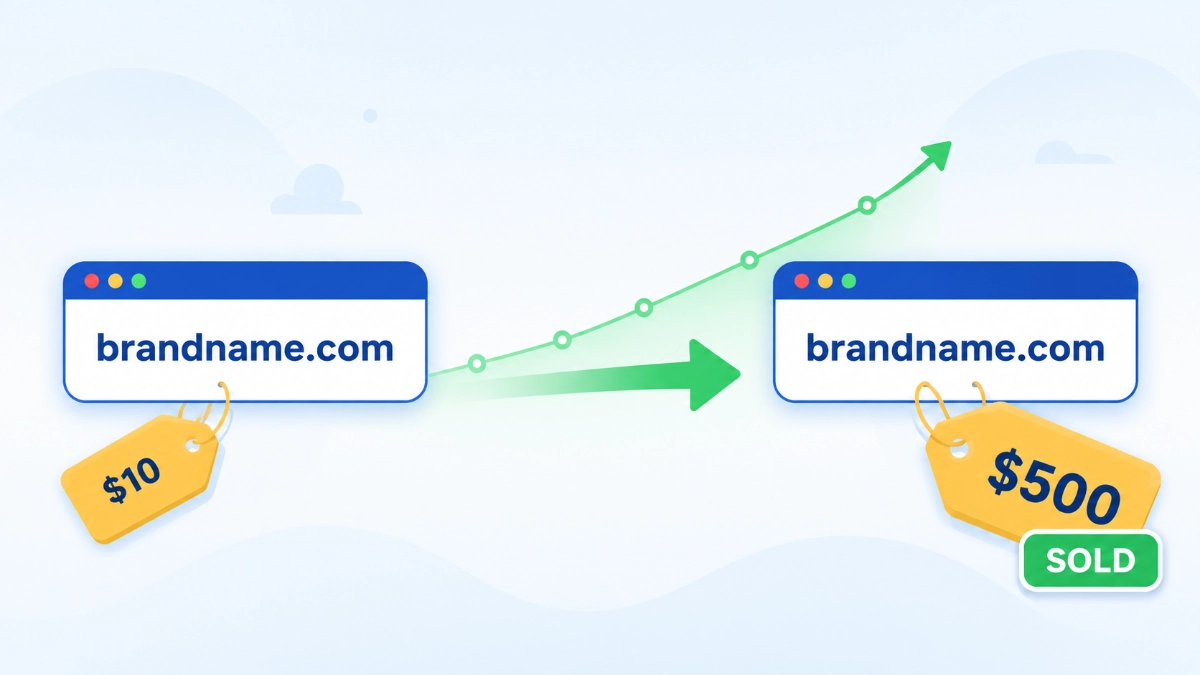
Why does a tiny budget still work? Because entry costs haven’t really moved. In 2026, the average first-year .com registration costs $14.39, and promo pricing regularly drops under $3 (DomainOffer, July 2026). Meanwhile, the resale market keeps growing — that 31.9% jump in reported dollar volume in 2025 came from more sales happening, not just bigger ones. More buyers, same $10 entry ticket. That’s a good market for small players.
One honest caveat before we start: this is a patience game, not a get-rich-quick one. Think of it like fishing with six lines in the water instead of running a shop with daily customers.
Step 1: Learn What Makes a Domain Worth Money
By the end of this step, you’ll be able to look at a domain and estimate whether it’s a $0 name or a $500 name. According to the 2025 InterNetX/Sedo Global Domain Report, the average aftermarket sale on Sedo was $2,345 and the median was $549 (Domain Name Wire, March 2025). The median matters more for you — half of all sales close below that number, and that’s exactly the tier a beginner plays in.
What separates a $549 domain from a worthless one? Four things, in rough order of importance:
- Extension. .com dominates — it generated 72% of all reported sales dollar volume in 2025, with country-code extensions (like .de or .co.uk) at 16.3% (NameBio data via NamePros, 2026). Niche extensions can work — .ai resales averaged $6,525 — but they’re harder to judge as a beginner.
- Length and pronounceability. One or two real words, under 12 characters, easy to say out loud. If you’d have to spell it over the phone, skip it.
- Commercial intent. Would a real business want this as its brand? “PlumberQuote.com” has obvious buyers; “MyCoolStuff2026.com” has none.
- Comparable sales. Search similar names on NameBio before buying. If nothing like your candidate has ever sold, that’s your answer.
The most common beginner pattern we see: someone registers ten hyphenated, three-word domains in an evening because they were cheap, then wonders a year later why nobody made an offer. Cheap to register and worth registering are two very different things. Spend a week on NameBio before you spend a dollar anywhere else.
Step 2: How Should You Split a $100 Budget?
Don’t spend all $100 on registrations. With average .com pricing at $14.39 and promos far lower (DomainOffer, July 2026), a smart split buys you a small, focused portfolio plus one higher-quality name — and keeps a reserve so renewals never catch you broke. Here’s the allocation we’d use starting from zero in 2026:
| Budget item | Cost | What you get |
|---|---|---|
| 5 hand-registered .coms (promo + standard pricing) | ~$50 | Your practice portfolio — two-word brandables or service + city names |
| 1 expired-auction or closeout domain | ~$25 | One name with existing history or better keywords than you can hand-register |
| WHOIS privacy | $0 | Free at Namecheap, Cloudflare, Spaceship, and most modern registrars |
| “For sale” landing pages (WordPress + free plugin) | $0 | A buy-it-now page on every domain you own |
| Renewal/escrow reserve | ~$25 | Covers first renewals so you’re never forced to drop a good name |
| Total | $100 | 6 domains + selling infrastructure + safety margin |
Notice what’s not in the table: paid appraisals, premium marketplace listings, and “domain flipping courses.” None of them move the needle at this stage. Watch renewal prices too — registrars love a $3 first year that quietly renews at $22.99.
Step 3: Find and Buy Your First Domains
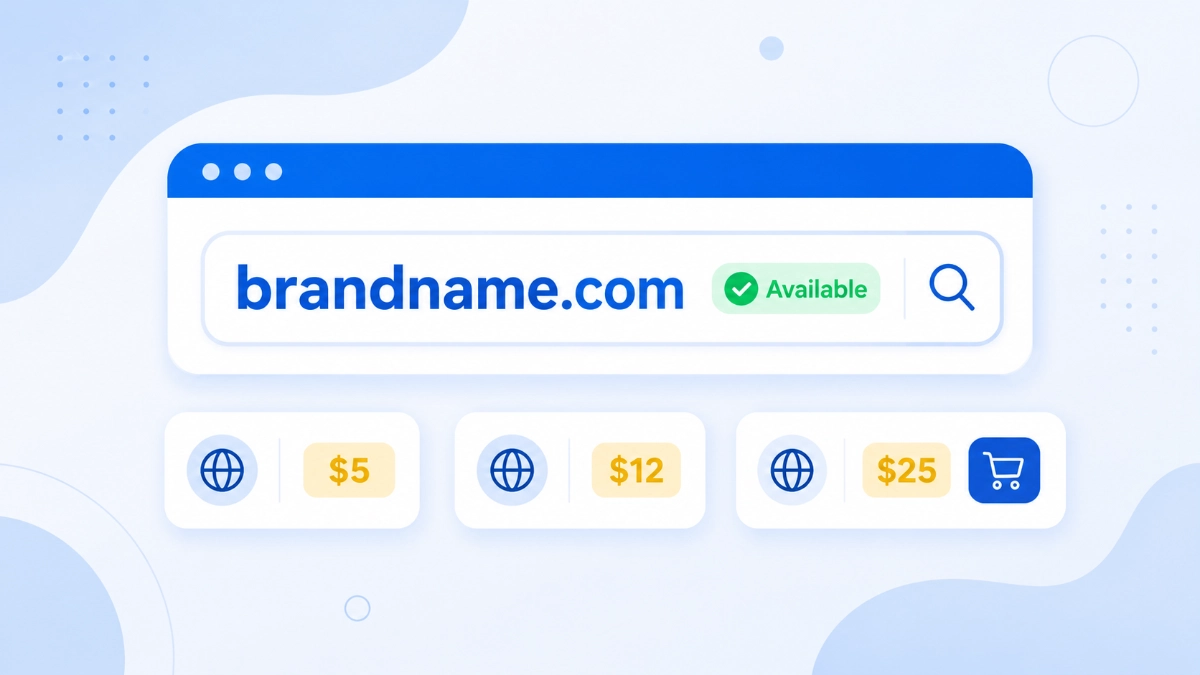
By the end of this step, you’ll own your first six domains. There are three places to buy at beginner prices, and each teaches you something different:
- Hand registration ($3–$15). Brainstorm names nobody has registered yet. Combine a service with a location or trend keyword, check availability at a cheap registrar, and register only the ones that pass your Step 1 checklist.
- Closeouts ($5–$30). Expired domains that got no auction bids at GoDaddy Auctions, Dynadot, or Namecheap Market sell at fixed low prices. These often have age and existing backlinks — small advantages a fresh registration lacks.
- Expired auctions ($12+). Better names, real competition. With $25 set aside, you’re a bottom-feeder here — and that’s fine. Set a maximum bid before the auction, not during it.
Whatever you buy, run one final check first: search the name on a trademark database like USPTO’s TESS. A domain containing someone’s registered brand isn’t an asset — it’s a legal problem with a renewal fee.
Step 4: How Do You Price a Domain for Resale?
Price from data, not hope. In 2025, the median reported sale on Sedo was $549 and the average was $2,345 (InterNetX/Sedo Global Domain Report, 2025). Yes, chat.com sold to OpenAI for $15.5 million in late 2024 — but headline sales are lottery tickets, not comps. Your realistic beginner target sits between $250 and $2,500 per domain.
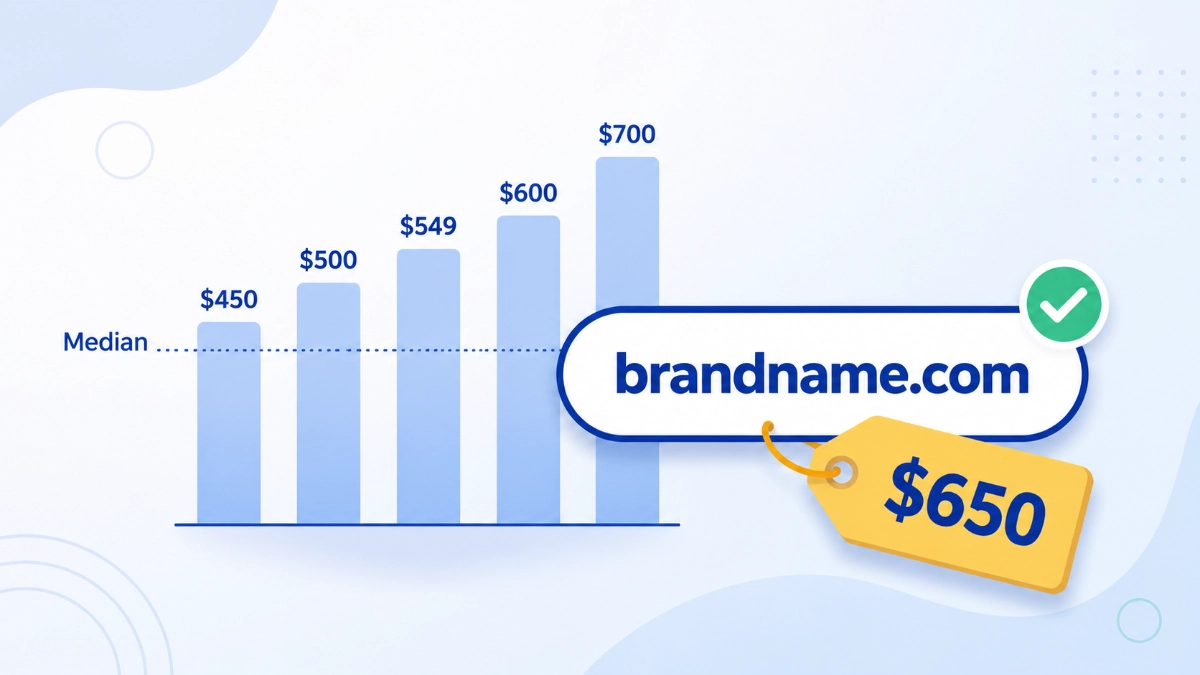
The working method: pull 5–10 comparable sales from NameBio (same extension, similar length, same niche), take the median, then set your buy-it-now about 10–20% above it to leave negotiation room. Feels too simple? That’s genuinely how most sub-$5,000 domains get priced. The classic beginner mistake is anchoring to the fantasy number — a $50,000 price tag on a $500 name doesn’t start negotiations, it ends them. Buyers just close the tab.
One more rule: always show a price or a “make offer” button. An unpriced domain with no contact path sells to exactly nobody.
Step 5: Where Should Beginners Sell Domains?
List everywhere you reasonably can — but understand the fees first, because they’re brutal at the low end. Marketplace commissions in 2026 range from 0% to 25% depending on platform and settings (DomainDetails marketplace comparison, 2026). On a $549 median sale, a 25% cut is $137 — more than your entire registration budget.
| Marketplace | Seller fee (2026) | Best for |
|---|---|---|
| Afternic (GoDaddy) | 15% with their nameservers, up to 25% without | Biggest buyer network; names show in registrar search results |
| Sedo | 10–15% ($60 minimum) | European buyers and ccTLDs |
| GoDaddy Auctions | 15–25% + $4.99/yr membership | Auction-style selling and buying closeouts |
| Atom | 15% | Brandable, made-up names |
| Spaceship SellerHub | 5% | Keeping fees minimal |
| Dynadot Aftermarket | 0% | Zero-commission listings |
| Your own landing page | 0% | Direct offers — you keep everything |
Put a “For Sale” Page on the Domain Itself
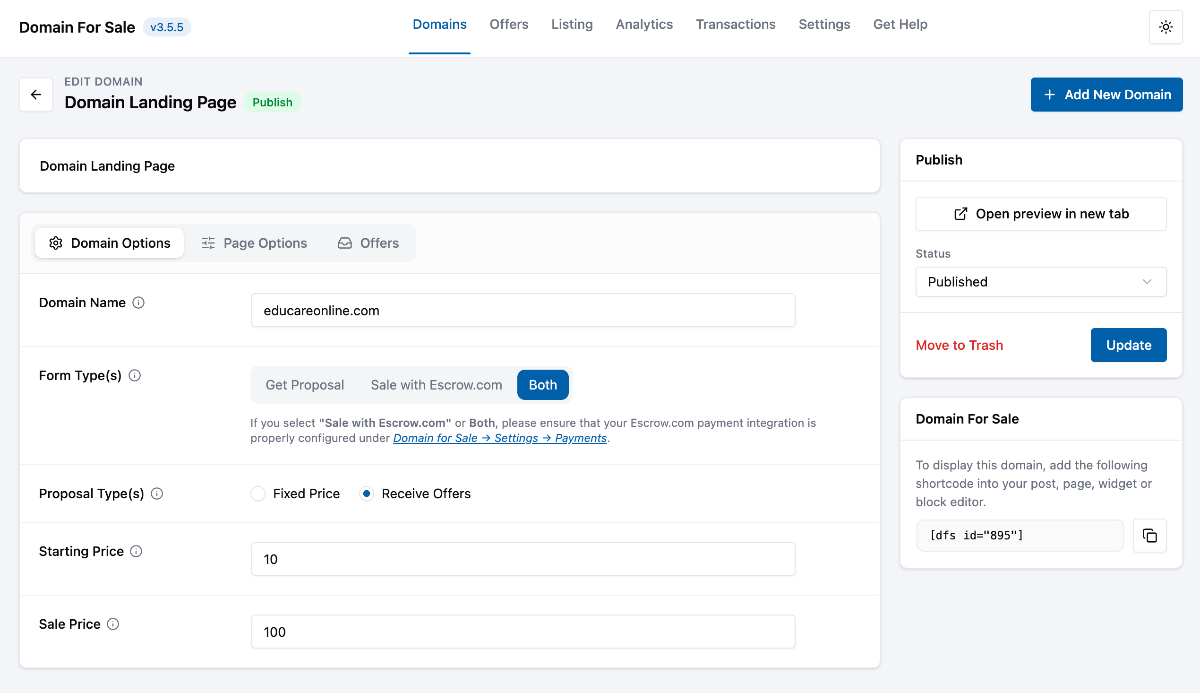
Here’s what most beginner guides skip: the highest-intent buyer for your domain is the person who typed it into a browser to see if it’s taken. If they land on a blank registrar parking page, that lead is gone. If they land on a clean “this domain is for sale” page with a price and an offer form, you’ve just opened a second sales channel that pays 0% commission.
The cheapest way to do this on WordPress is the free Domain For Sale plugin — point the domain at a WordPress install, and it turns the whole site into a professional sales landing page with a buy-now price, offer form, and contact details. The Pro version adds more layouts and lead-capture options when your portfolio grows. Keep your marketplace listings running in parallel; the landing page simply makes sure direct visitors can actually buy.
Common Beginner Mistakes (Learn From Other People’s Renewal Bills)
Typical domain portfolios sell just 1–2% of their names per year (Namecheap, on sell-through rates). Most beginner losses come from ignoring that math. The big five:
- Buying quantity instead of quality. Thirty $3 domains feel productive. Six researched ones outperform them every time — and cost a third as much to renew.
- Forgetting renewals compound. At a 1–2% sell-through rate, most of your portfolio renews at least twice before anything sells. Budget for it or your “profit” is already spent.
- Pricing on emotion. If your asking price isn’t backed by comparable sales, it’s a wish, not a price.
- Registering trademarked names. “NikeShoesOutlet.com” isn’t clever, it’s a UDRP complaint waiting to happen. You’ll lose the domain and possibly more.
- Leaving domains unreachable. No landing page, no listing, no contact info in WHOIS — some domains never sell simply because no buyer could figure out how to make an offer.
Is Domain Flipping Still Profitable in 2026?
Yes — the market grew 31.9% in reported dollar volume in 2025 (NamePros/NameBio, 2026) — but profitability at the individual level depends entirely on patience and buy quality. Run the honest math: with six domains and typical sell-through rates, you might wait a year or more for your first sale. When it comes, the Sedo median of $549 turns your $100 into roughly a 5x return, even after fees.
So treat the first $100 as tuition. You’re learning valuation, negotiation, and market timing on real assets with pocket-money risk. The flippers who make consistent income scaled those skills into hundreds of domains — every one of them started with a first small portfolio exactly like yours.
Frequently Asked Questions
How much money do you need to start domain flipping?
You can start with under $100. Average .com registration costs $14.39 in 2026, with promotional first-year pricing as low as $2.90 (DomainOffer, July 2026). That’s enough for five or six carefully researched domains plus a renewal reserve — more useful than one expensive name when you’re learning.
How long does it take to sell a domain name?
Usually months to years. Typical portfolios sell 1–2% of their names annually (Namecheap), so a six-domain portfolio may need a year or more for its first sale. Good pricing, multi-marketplace listings, and a “for sale” landing page on the domain itself all shorten the wait.
What kind of domains sell best for beginners?
Short, pronounceable .com domains with clear commercial meaning. .com generated 72% of reported sales dollar volume in 2025 (NameBio data), and the $250–$2,500 price tier — two-word brandables and service-plus-location names — is where beginner inventory realistically sells.
Can I sell a domain without paying marketplace commission?
Yes. Direct sales from a landing page on the domain itself carry 0% commission — the free Domain For Sale WordPress plugin builds one in minutes. Dynadot’s aftermarket also charges 0% and Spaceship charges 5%, versus 15–25% at Afternic or GoDaddy Auctions (DomainDetails, 2026).
Is domain flipping legal?
Buying and reselling generic domain names is completely legal. What’s not legal is cybersquatting — registering names containing trademarks to profit from someone else’s brand. Check the USPTO trademark database before buying, and stick to generic words, phrases, and invented brandables.
Your Next Step
You now know the full loop: research value on NameBio, split your $100 across six smart buys, price against real comps, and sell through marketplaces plus your own zero-commission landing page. The market’s numbers are on your side — $244M+ in reported sales and growing — but only patience and buy discipline get you a piece of it.
Here’s your homework for tonight: spend 30 minutes on NameBio studying sales in a niche you know well, and shortlist three domain ideas. When you’ve bought your first name, put a free Domain For Sale landing page on it the same day. Domain flipping for beginners really comes down to that — start small, price honestly, and make every domain you own easy to buy.
Sources
- Verisign/DNIB, The Domain Name Industry Brief Q1 2026, retrieved 2026-07-14, https://www.dnib.com/articles/the-domain-name-industry-brief-q1-2026
- NamePros, 2025 Domain Name Market Dollar Volume Trends based on NameBio Data, retrieved 2026-07-14, https://www.namepros.com/blog/2025-domain-name-market-dollar-volume-trends-based-on-namebio-data.1374269/
- Domain Name Wire, Peeking inside Sedo and InterNetX’s 2025 Global Domain Report, retrieved 2026-07-14, https://domainnamewire.com/2025/03/18/peeking-inside-sedo-and-internetxs-2025-global-domain-report/
- DomainDetails KB, Domain Aftermarket Platforms Compared: Sedo vs Afternic vs Atom (2026), retrieved 2026-07-14, https://domaindetails.com/kb/domain-investing/domain-aftermarket-platforms-compared
- DomainOffer, Cheapest .COM Domain — 150+ registrar price comparison, retrieved 2026-07-14, https://domainoffer.net/tld/com
- Namecheap Blog, The Importance of a Domain Name Sell-Through Rate, retrieved 2026-07-14, https://www.namecheap.com/blog/domain-name-sell-through-rate/