

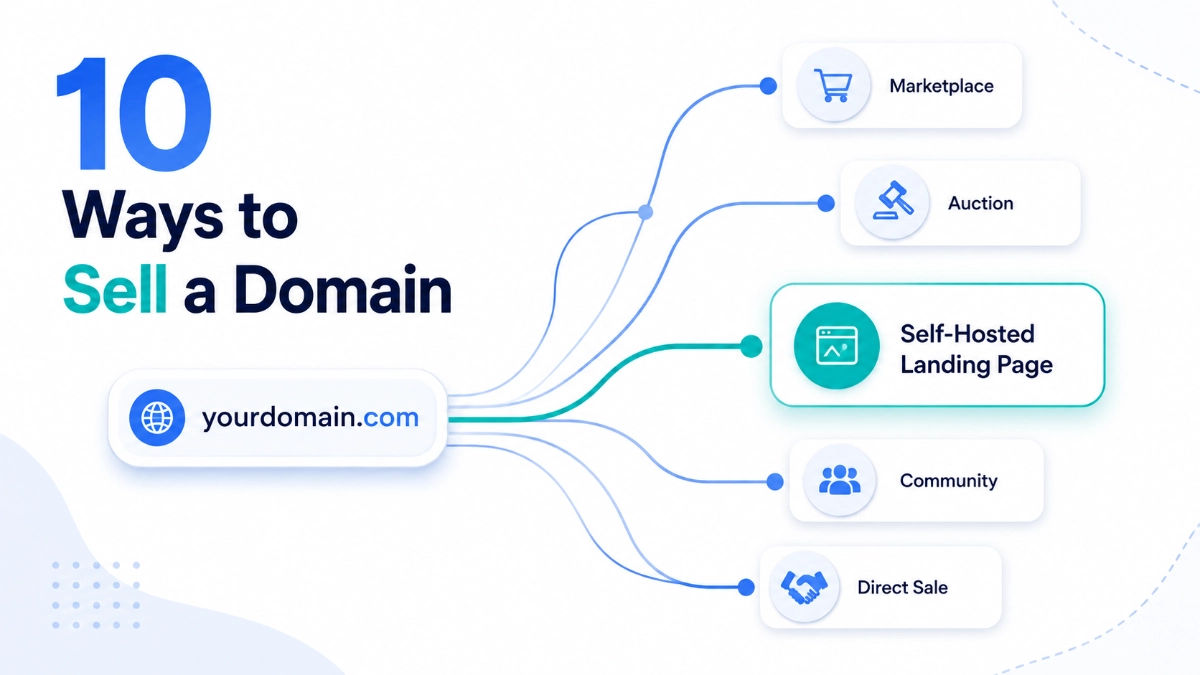

The best places to sell domains depend on what you value most: reach, control, speed, or margin. Our #1 overall pick is a self-hosted sale page on the domain itself — it captures people who type the domain into a browser, gives you full control over branding and pricing, and adds a direct-sales channel with no marketplace commission on the inquiries it generates. It doesn’t replace marketplace distribution, though, and it isn’t the right sole channel for every name.
For many sellers, the practical setup is a self-hosted page plus one or two compatible marketplaces. “Compatible” is the key word — some platforms require exclusivity or specific nameservers, and conflicting Buy Now prices across channels cause real problems. This guide ranks ten current options, explains what each does well, and shows how to combine them safely.
Key Takeaways
- A self-hosted sale page provides full branding, direct inquiries, and no marketplace commission on leads generated through the seller’s own domain.
- Afternic is the strongest option when broad registrar distribution is the priority.
- Sedo offers multiple sales paths — retail listings, auctions, parking, and international reach — with fees that vary by path.
- Curated marketplaces such as Atom and BrandBucket suit qualifying brandable domains, and some tiers involve approval, nameserver, or exclusivity conditions.
- Community and registrar marketplaces like NamePros, Dynadot, Namecheap, and Sav work well for lower-priced or investor-to-investor sales.
- Verify exclusivity and nameserver rules before listing the same domain through multiple channels.
Table of Contents
Quick Comparison: The 10 Best Places to Sell Domains
| Rank | Selling channel | Best for | Fee level | Seller effort | Main limitation |
|---|---|---|---|---|---|
| 1 | Your own website (self-hosted page) | Direct buyer capture and full control | None | High | Creates no marketplace distribution |
| 2 | Afternic | Broad registrar distribution | Variable — Medium to High | Low | Commission depends on plan and nameservers |
| 3 | Sedo | Flexible formats and international reach | Medium to High | Low | Fee level varies by sales path |
| 4 | Atom | Brandable and curated domains | Variable — Low to High | Medium | Top tiers involve approval and nameserver conditions |
| 5 | Dynadot Marketplace | Registrar-managed fixed-price sales | Medium | Low | Smaller buyer reach than the big networks |
| 6 | Flippa | Domains with websites, traffic, or revenue | Low to Medium success fee, plus listing costs | Medium | Upfront listing fees; broader, less domain-focused audience |
| 7 | Namecheap Market | Simple Buy Now sales at Namecheap | Medium | Low | Fixed-price only; registrar requirements |
| 8 | Sav Marketplace | Commission-sensitive fixed-price sellers | Low | Low | Limited distribution — you supply the demand |
| 9 | NamePros Marketplace | Investor-to-investor and wholesale sales | None for standard listings | High | Wholesale prices; you close the deal yourself |
| 10 | BrandBucket | Curated brandable .com names | High | Low | Exclusive listings and required nameservers |
Marketplace fees, listing requirements, exclusivity policies, and transaction services can change. Fee bands and platform details were checked against official information on July 19, 2026. Confirm the current terms before listing a domain.
How We Ranked These Options
We scored each channel on buyer reach, seller control, fee level, ease of listing, transaction support, beginner-friendliness, portfolio suitability, branding control, listing restrictions, and how well it complements other channels. This is an editorial ranking, not a universal truth — the right choice depends on your domain’s quality and type, expected price, existing traffic, how fast you need to sell, and how much of the work you want to do yourself.
Fee levels use consistent bands rather than exact percentages, since rates change: None (no marketplace commission), Low (generally below 10%), Medium (10% to below 20%), High (20% or more), and Variable where different listing tiers cross bands. Some platforms also charge separate listing or promotion fees.
1. Your Own Website With a Self-Hosted Domain Sale Page
Full transparency: we build the Domain For Sale WordPress plugin discussed in this section. The #1 ranking rests on structural advantages, so judge the argument on its merits.
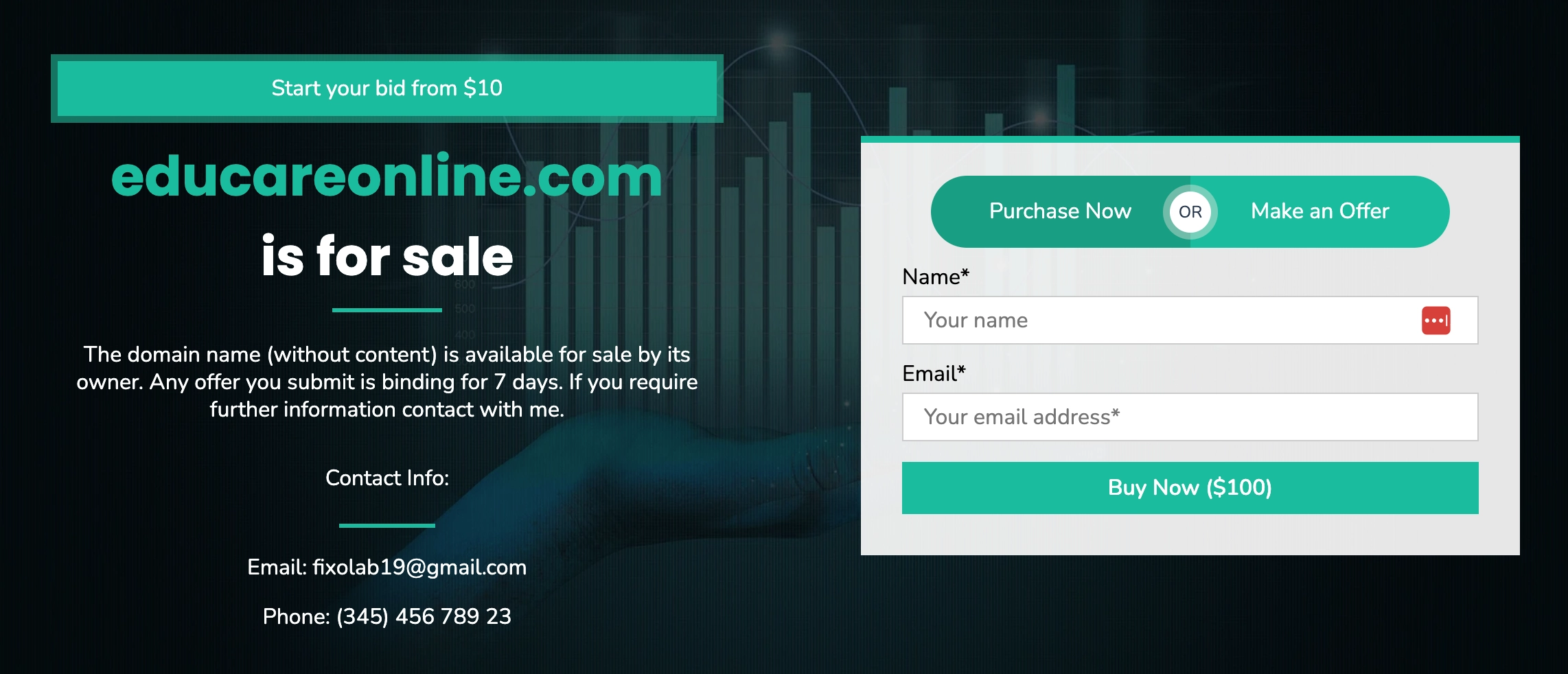
A self-hosted sale page turns the domain itself into the sales destination. Anyone who types it into a browser — often the most motivated buyer there is — sees it’s available and how to inquire. You control the headline, price, offer form, and design; you own the inquiry and the buyer relationship; and a direct inquiry generated through your own website carries 0% marketplace commission before any escrow, payment, hosting, banking, tax, or transfer expenses. It also complements many non-exclusive marketplace listings and stays useful if you switch marketplaces later.
The free Domain For Sale plugin handles the setup: landing-page templates, fixed-price or offer-based presentation, inquiry forms, centralized offer management, email notifications, and portfolio listings. Pro adds Escrow.com purchase forms, private Escrow invitations, and extra layouts.
Suggested for you: How to Set Up a Domain For Sale Landing Page in WordPress
The honest limitations: it creates no marketplace distribution — you generate or capture the buyer, handle negotiation, maintain the site, and arrange secure payment and transfer. It isn’t the only zero-commission channel, it can’t sit alongside exclusive listings, and self-hosted nameservers can affect commission eligibility on certain marketplaces. Verdict: the best owned channel for any independently managed domain, and the strongest foundation to build other channels around. See our guide on how to sell a domain without paying commission.
Suggested for you: How to Accept Domain Payments Securely With Escrow.com in WordPress
2. Afternic
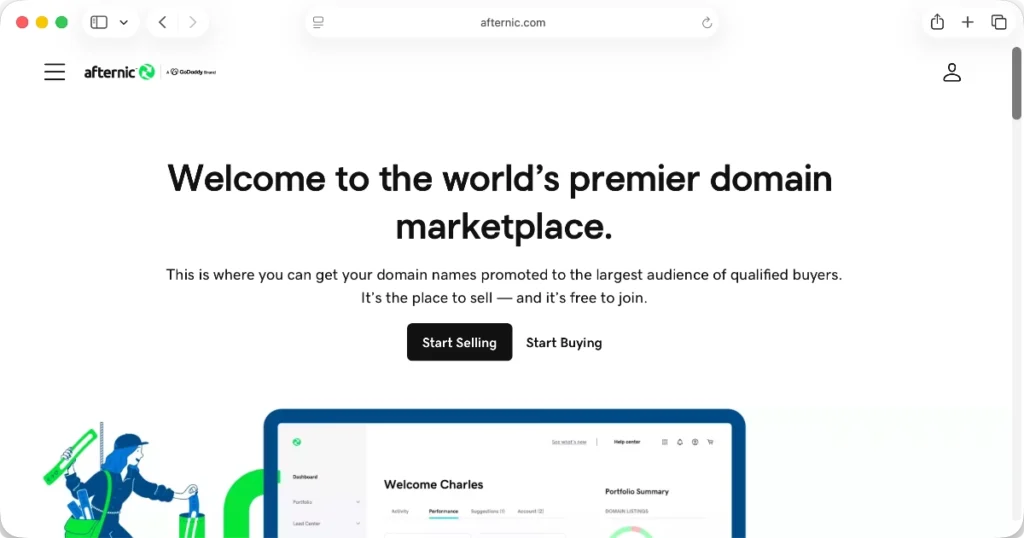
Afternic, GoDaddy’s aftermarket marketplace, is the strongest pure-distribution option. Eligible listings surface in search results across a large network of partner registrars, so buyers encounter your domain while doing something else entirely — registering a name at their own registrar. Fast Transfer automates fulfillment for eligible domains, sales landers and Buy Now pricing reduce friction, Lease to Own widens the buyer pool, and sales support can assist on larger deals.
The trade-offs: commission is substantial and depends on your plan and nameserver configuration — qualifying marketplace nameservers reduce the rate but replace your self-hosted lander. You get less control over branding and the buyer journey, marketplace-generated buyers must be handled under Afternic’s terms, and Fast Transfer doesn’t cover every domain. Fee band: Variable — Medium to High. Verdict: the default distribution channel for portfolios; pair it with owned pages deliberately. Afternic vs Selling Domains on Your Own Website For the wider platform picture, see our Sedo vs Afternic vs Dan.com comparison.
3. Sedo
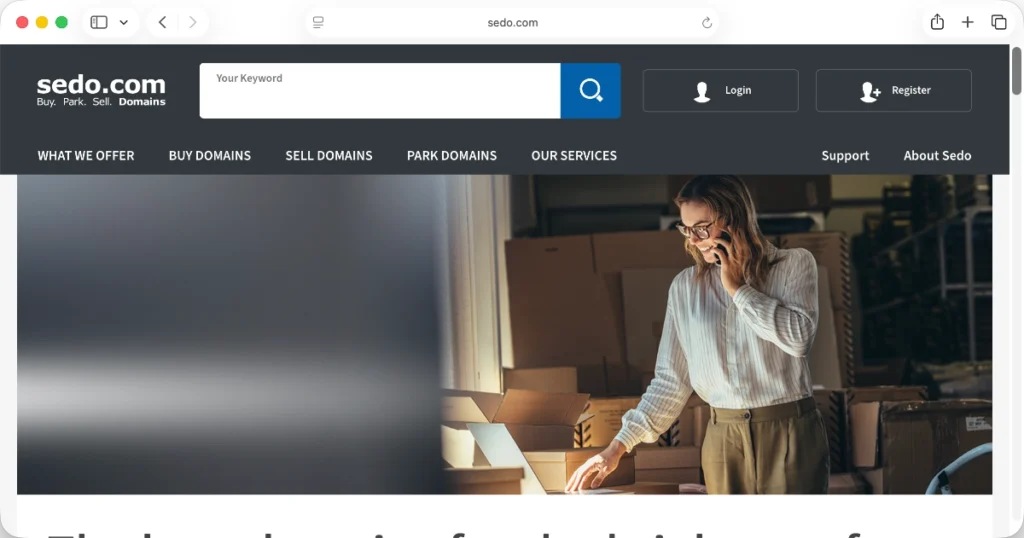
Sedo is the most flexible of the big marketplaces and the most international. It supports Buy Now and Make Offer listings, auctions, domain parking, sales landers, SedoMLS distribution through partner registrars, a transfer service for externally negotiated deals, and brokerage — all under one account, across a wide range of TLDs.
That flexibility is also the catch: the fee depends on the sales path. Rates differ based on whether the sale is a qualifying Buy Now with a Sedo lander, a standard marketplace sale, or a SedoMLS network sale, and minimum commissions can bite on lower-value deals. Optional services carry separate charges. Fee band: Medium to High, depending on sales path. Verdict: excellent reach and format variety, especially for non-.com and international names — just understand which fee path your setup puts you on before you list.
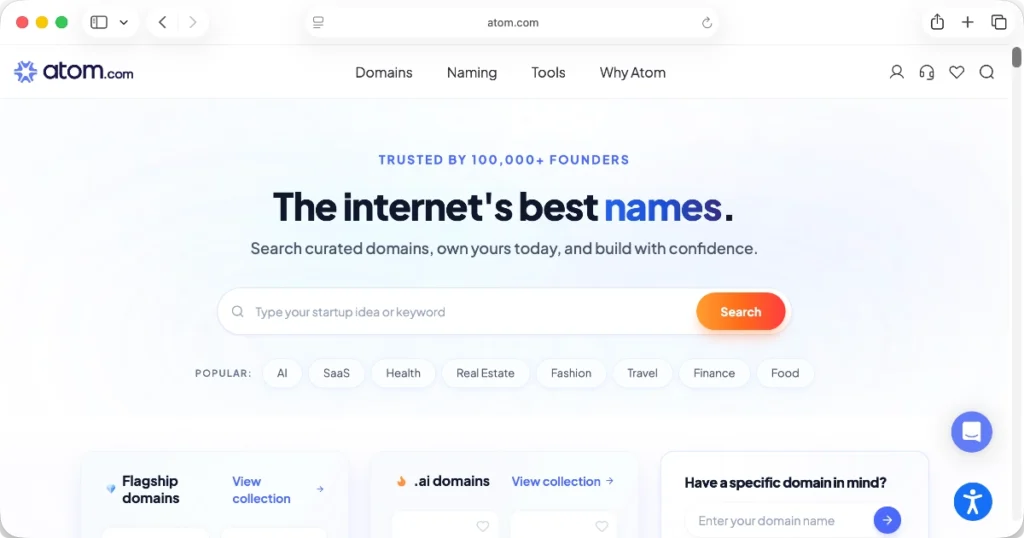
4. Atom
Atom (formerly Squadhelp) is the strongest home for brandable domains. Its listing tiers are really different products: Standard gives search visibility at a low commission with full pricing control, Plus adds marketing exposure and curated-marketplace eligibility at a mid-band rate, and Premium is the selective, high-touch tier — professional logos, heavy merchandising, payment plans, and marketplace discovery aimed at startup buyers. Wholesale options exist for portfolio movement.
The trade-offs concentrate at the top tier. Premium approval is selective, Premium listings involve pointing nameservers to Atom and pricing-consistency conditions, and the highest-exposure tiers carry the highest commissions. Utility and keyword domains fit less naturally than invented brand names. Fee band: Variable — Low to High. Verdict: a serious channel for qualifying brandables — treat Standard and Premium as separate decisions, and read the current tier terms before pointing nameservers anywhere.
5. Dynadot Marketplace
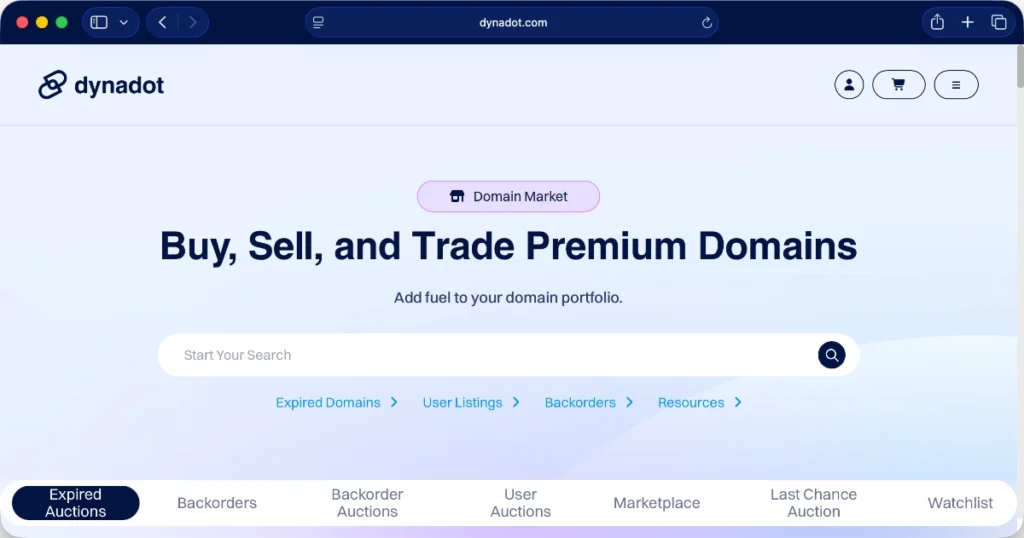
Dynadot runs a capable registrar-based marketplace: Buy Now and Make Offer listings, user auctions, and customizable for-sale landers, with registrar-integrated checkout and transfer. Domains registered elsewhere can be listed subject to additional requirements, and proceeds flow through Dynadot’s payout process after a short processing period.
It’s best for domains already at Dynadot, fixed-price investor sales, and sellers who want a simple, predictable workflow. The limitation is reach — it’s a registrar marketplace, not a distribution network on Afternic’s scale, and certain TLDs may not qualify. Its expired-domain auctions are buyer inventory, not a way to sell your own names. Fee band: Medium. Verdict: a solid, low-friction option for Dynadot users; pair with broader channels for reach.
6. Flippa
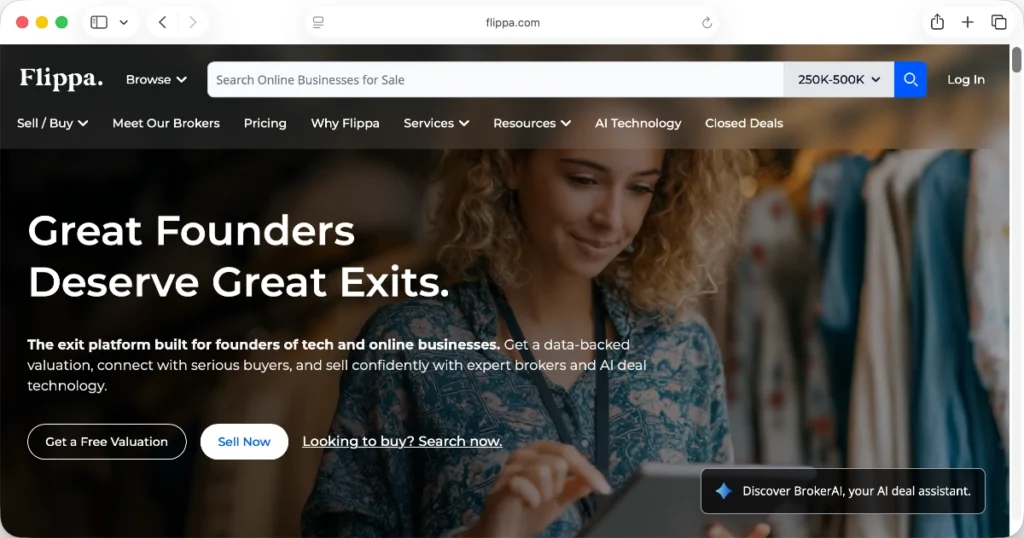
Flippa is a digital-asset marketplace: domains sell alongside websites, SaaS products, apps, and ecommerce stores. That makes it the right venue when you’re selling more than a bare name — a domain with a developed site, traffic, or revenue can be presented as a complete asset with a detailed listing, auction dynamics, and a broad buyer audience.
The trade-offs: upfront listing packages apply and aren’t refundable, success fees are charged on completion, and a standalone undeveloped domain competes for attention against full businesses in front of an audience that isn’t purely domain investors. Presentation and promotion are on you. Fee level: Low to Medium success fee, plus possible listing costs. Verdict: the best choice on this list for domain-plus-asset sales; a weaker fit for most bare domains.
7. Namecheap Market
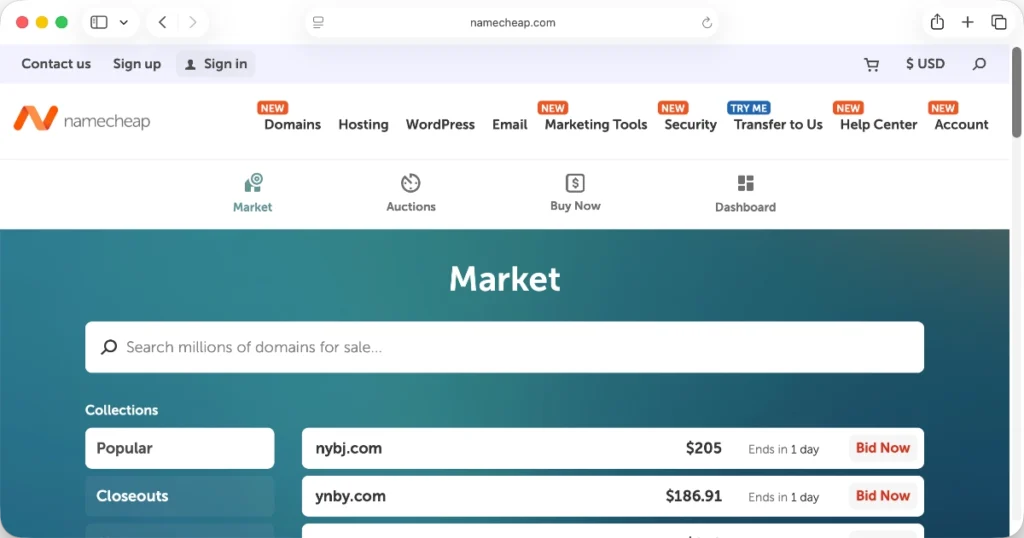
Namecheap Market is a straightforward fixed-price marketplace built around the Namecheap ecosystem. Listing is free and quick, buyers check out through a familiar registrar brand, and completed sales move to the buyer through Namecheap’s account transfer process — one of the smoother handovers at this end of the market.
The model is deliberately simple: primarily Buy Now, with less negotiation flexibility and far less distribution than Afternic or Sedo. It’s best for Namecheap customers selling lower- and mid-priced names who value convenience over maximum exposure. Fee band: Medium. Verdict: a convenient secondary channel for Namecheap-held domains rather than a primary sales strategy.
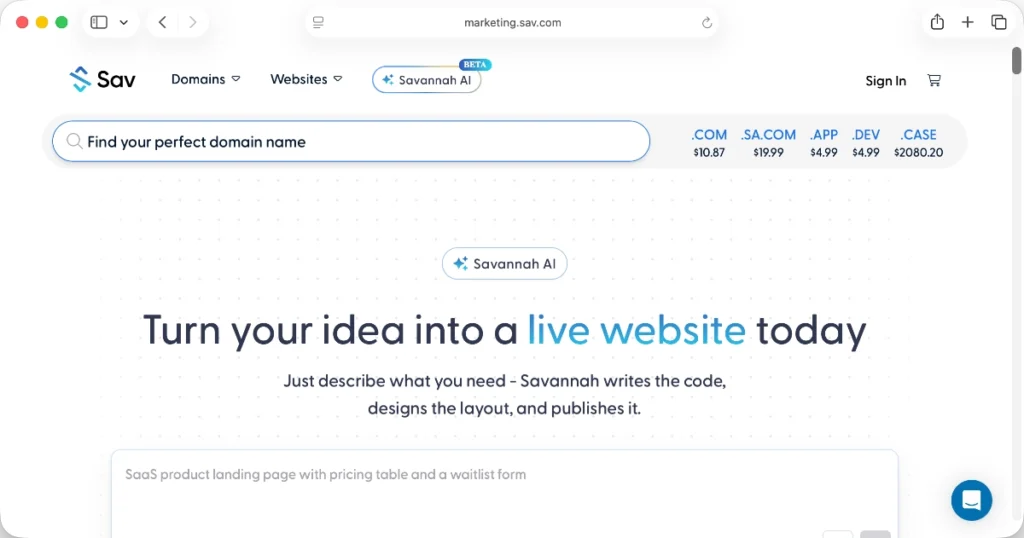
8. Sav Marketplace
Sav has built its marketplace pitch around cost: a low commission band on fixed-price and auction listings, free for-sale landers, listing tools, and registrar integration. For commission-sensitive sellers with type-in traffic or their own marketing, the math is attractive.
The honest counterweight: low commission doesn’t create buyers. Sav’s reach is well below Afternic’s or Sedo’s, there’s little broker-driven distribution, and the seller supplies most of the demand. Eligibility and payout terms should be confirmed before committing a portfolio. Fee band: Low. Verdict: a genuinely cheap marketplace lane for sellers who bring their own traffic — but reach, not rate, is usually what closes a sale.
9. NamePros Marketplace
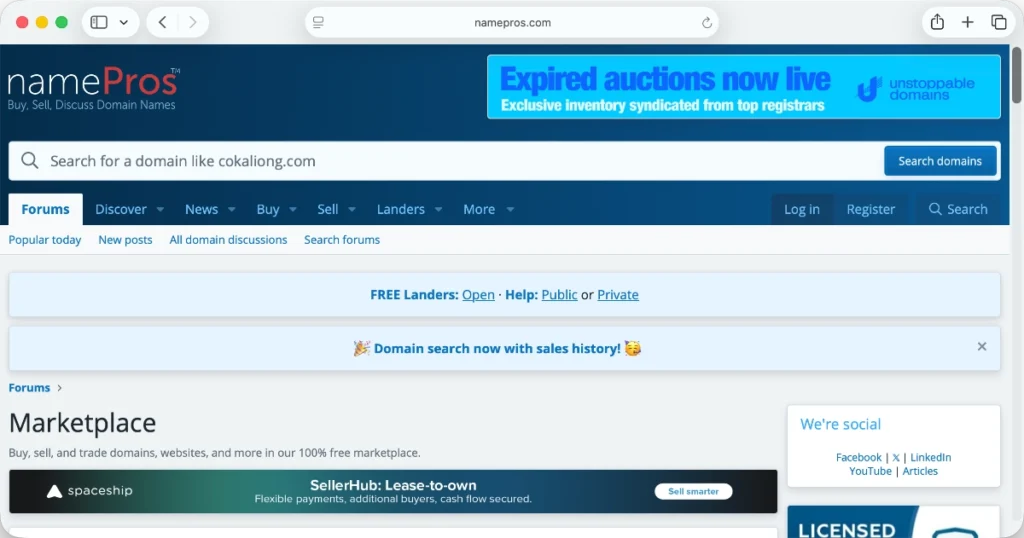
NamePros is a community, not a retail marketplace. Its marketplace sections host investor-to-investor sales: wholesale pricing, liquid domains, portfolio deals, auctions, and openly negotiated transactions, with direct communication between buyers and sellers. Standard community listings carry no marketplace commission, and the forum doubles as a source of pricing feedback.
Know what it isn’t: there’s no retail distribution, no built-in full-service checkout, and buyers are mostly investors hunting below-retail prices — a strong end-user domain will usually fetch more elsewhere. You arrange payment and transfer yourself (escrow costs still apply), and reputation and forum rules matter. Fee band: None for standard listings; transaction costs may remain. Verdict: the best venue for liquidity and wholesale deals, not for maximizing retail price.
10. BrandBucket
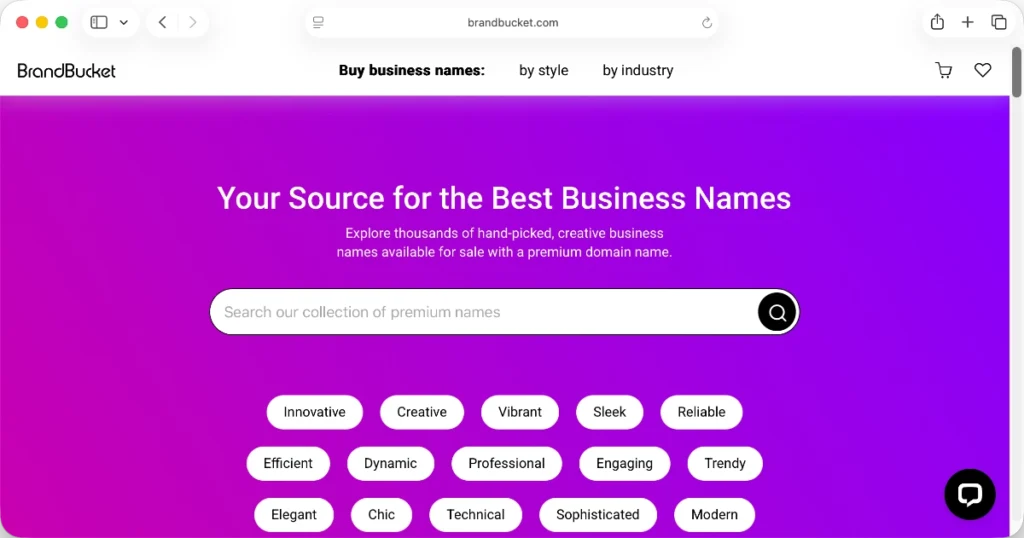
BrandBucket is the original curated brandable marketplace: approved names get professional logos, polished merchandising, and placement in a catalogue browsed by startup founders, with sales and transfer assistance included. For invented, memorable brand names — especially .coms — the presentation quality is a real asset.
The conditions are the strictest on this list, which is why it ranks tenth despite its strengths. Domains must pass approval, a small submission fee applies per appraisal, listings are exclusive to BrandBucket, and its nameservers are required for the listing’s duration — ruling out an independent sale page or other marketplace listings for that domain, with removal subject to notice under current terms. Commission sits in the high band. Fee band: High. Verdict: worthwhile for qualifying brandables you’re happy to commit exclusively; incompatible with the multi-channel approach this article otherwise recommends.
Why GoDaddy Auctions and Dan.com Aren’t Separate Entries
Two familiar names are missing deliberately. Dan.com is no longer a standalone marketplace — GoDaddy moved its tools and sellers into Afternic and closed remaining platform access on June 27, 2025. And GoDaddy Auctions stopped accepting new member-to-member seller listings in April 2024, refocusing on expired-domain inventory and the buy side. Sellers wanting GoDaddy-network exposure should evaluate Afternic and GoDaddy’s List for Sale, whose listings still syndicate through GoDaddy’s systems.
How to Choose the Right Place to Sell a Domain
| Seller situation | Recommended starting channel | Why |
|---|---|---|
| One strong domain with type-in traffic | Self-hosted sale page | Own the visitors already arriving |
| Large portfolio needing registrar distribution | Afternic | Widest partner-network reach |
| Curated brandable .com | Atom or BrandBucket | Curated presentation for startup buyers |
| Domain plus developed website | Flippa | Sell the whole asset, not just the name |
| Wholesale liquidation | NamePros | Fast investor-to-investor liquidity |
| Domain registered at Namecheap | Namecheap Market | Free listing, smooth account transfer |
| Domain registered at Dynadot | Dynadot Marketplace | Integrated checkout and transfer |
| Already have an interested buyer | Escrow.com or a checkout-link service | Pay a closing fee, not a distribution fee |
| Want professional brokerage | Sedo or Afternic | Broker and sales support available |
| Want complete branding control | Self-hosted sale page | You design the entire buyer experience |
| Need the fastest realistic sale | Afternic or NamePros (wholesale) | Distribution or liquidity — no channel guarantees speed |
| Want to minimize commission | Self-hosted page or Sav | Lowest fee bands — but you supply the demand |
The Best Strategy Is Usually a Compatible Stack
Almost nobody should use exactly one channel — and nobody should try to use all ten. A workable stack looks like this:
- Put a professional sale page on independently managed domains where direct buyer capture matters.
- List compatible domains on Afternic or Sedo for broader distribution.
- Use a curated marketplace only for domains that match its inventory and its terms.
- Use NamePros or wholesale channels when liquidity matters more than maximum retail price.
- Use Flippa when the domain includes a website, audience, traffic, or business.
- Close independently negotiated sales through a reputable transaction service.
- Keep Buy Now prices synchronized everywhere a domain is listed.
- Remove sold domains from every active platform immediately.
- Review exclusivity and nameserver requirements before combining channels.
- Never move a marketplace-generated lead off-platform to avoid a fee its agreement requires.
More listings aren’t automatically better. Every added channel brings pricing-conflict risk, double-sale risk, possible exclusivity violations, different commission consequences, and administrative overhead. Two or three well-chosen channels beat ten neglected ones.
How to Sell a Domain Safely After Finding a Buyer
Finding a buyer is half the sale — closing it safely is the other half, and it’s where expensive mistakes happen. Agree on the exact domain and price in writing, confirm who pays transaction fees, and use a recognized escrow or marketplace checkout service. Confirm the payment status by logging into that service directly — never from a forwarded email or screenshot — and transfer the domain only after funds are secured. Keep registrar and transaction records, then remove every active listing once the deal completes.
Suggested for you: How to Accept Domain Payments Securely With Escrow.com in WordPress
Frequently Asked Questions
Where is the best place to sell a domain name?
There’s no single best place — it depends on buyer reach, commission, domain type, existing traffic, and how involved you want to be. A self-hosted sale page is the best owned channel for direct buyers; Afternic and Sedo offer the widest distribution; curated marketplaces suit brandables. Many sellers get the best results from a self-hosted page combined with one or two compatible marketplaces, chosen per domain.
Can I sell my domain without using a marketplace?
Yes. Put a sale page on the domain itself — for example, with the free Domain For Sale WordPress plugin — collect inquiries directly, negotiate the price, close through a secure service such as Escrow.com, and transfer the domain after payment is secured. There’s no marketplace commission on a lead generated through your own site, though escrow, payment, hosting, and transfer expenses can remain.
How much do domain marketplaces charge?
It spans the full range. Community listings on NamePros and direct sales from your own site carry no marketplace commission. Low-fee marketplaces like Sav sit under 10%. Registrar marketplaces such as Dynadot and Namecheap typically fall in the 10%–20% band. High-distribution and curated platforms — Afternic, Sedo’s network sales, Atom Premium, BrandBucket — can reach 20% or more, and some platforms add listing fees or minimum commissions. Check each platform’s current schedule.
How can I sell a domain quickly?
No channel guarantees a fast sale, but several habits improve the odds: price realistically against comparable sales, use a Buy Now option so ready buyers don’t have to negotiate, get broad distribution through a network like Afternic, keep a clear sale page on the domain itself, respond to inquiries within hours, and have a smooth transfer process ready. For genuine speed at a price discount, wholesale venues like NamePros trade margin for liquidity.
Can I list my domain on multiple marketplaces?
Often, but not always. Many marketplaces are non-exclusive, and combining one or two with your own sale page is common. Some — notably BrandBucket, and certain curated tiers elsewhere — require exclusivity or specific nameservers that rule out other channels. Keep Buy Now prices identical everywhere, manage Fast Transfer inventory carefully, remove sold domains immediately, and read every marketplace agreement before combining channels.
Is it better to use a domain marketplace or sell privately?
Marketplaces win on reach, buyer trust, and transaction handling — that’s what their commission pays for, and for buyers you couldn’t reach yourself, it’s usually worth it. Private selling wins on margin and control when you generated the buyer: a direct deal closed through escrow keeps the marketplace’s percentage out of the equation. The deciding question is who found the buyer, not which model is better in the abstract.
Conclusion
The best places to sell domains form a toolkit, not a single answer. A self-hosted website is the strongest owned channel for direct buyer capture and branding. Afternic and Sedo earn their fees when distribution finds the buyer. Atom and BrandBucket suit qualifying brandables — with conditions attached. Registrar marketplaces offer convenient, lower-friction sales, Flippa shines when you’re selling more than a bare name, and NamePros handles wholesale liquidity. Exclusivity rules mean no single strategy fits every domain, so choose channels per name.
Whichever marketplaces you use, give every independently managed, non-exclusive domain a professional way for direct buyers to reach you. The free Domain For Sale plugin sets that page up on WordPress — it won’t generate buyers by itself, but it makes sure the ones who arrive have a clear next step.